
Gisèle on Newsnight
When a survivor refuses anonymity, culture has to pay attention
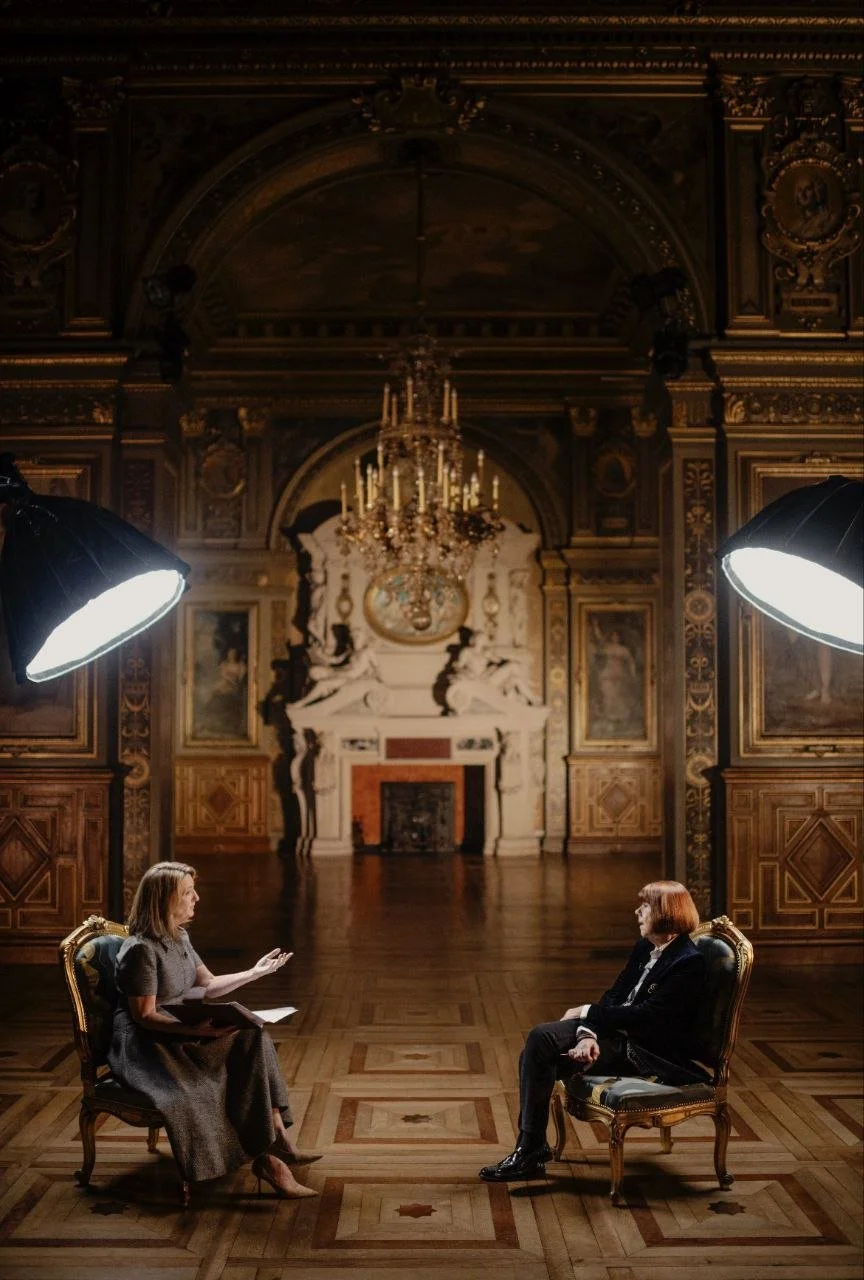
Before anything else, can we take a moment for this setting?
The scale. The light. The stillness.
Gisèle and Victoria are seated opposite each other in a vast, ornate room. The setting is grand - and fitting.
Not spectacle for spectacle’s sake, but scale that mirrors the gravity of what is being spoken.
Because Gisèle Pelicot’s story demands nothing less.
At the centre of France’s largest rape trial, she waived her legal right to anonymity and chose an open hearing. Not for exposure - but for principle. She refused to carry the shame that was never hers.
“For more than four years, I carried this shame… It felt like a double punishment.”
An open courtroom meant the men on trial did not benefit from invisibility. It meant the public saw what coercion and chemical submission actually look like. It shifted where responsibility sits. Throughout the proceedings, she walked into court with her head held high. Outside, women gathered in solidarity. Inside, the truth was recorded.
What resonates most is her steadiness:
“I felt crushed by horror - but I don’t feel anger.”
Strength here isn’t loud. It’s composed. It’s intentional. It recalibrates culture.
When stories like this are held properly - not sensationalised, not minimised - something shifts. The seriousness of the setting mirrors the seriousness of the experience. And that matters.
At MYH, we believe lived experience must be centred with dignity, scale, and depth. Not tokenised. Not reduced. This conversation - and the way it has been held - is a reminder that these moments carry weight. And we should treat them that way.