
Victims’ Right to Review
Challenging decisions made by the
Police and the CPS
If you’ve been told that no further action will be taken in your case, you may feel confused, shut down, or left without answers. The Victims’ Right to Review (VRR) exists to give you a way to ask for that decision to be checked.
VRR allows victims to request a review of certain decisions made by the Police or the Crown Prosecution Service when a case is not taken forward.
It is not a complaint. It is not about blaming you. And it is not about proving guilt. It is about making sure decisions are lawful, fair, and properly considered.
A quick overview
VRR applies when a decision has been made not to charge or not to continue a case
You do not need a lawyer
You do not need to give a reason
You usually have three months to ask for a review
A different decision-maker will look at the case again
If the Police made the decision
You can ask the police to review a decision if:
A suspect was identified and interviewed, and
The police decided not to charge, or
The police decided the case did not meet the test to be referred to the CPS
This applies even if:
You had withdrawn your complaint and later reinstated it
You were previously unable to engage and are now ready to do so
What happens next
An officer not involved in the original decision will review the case
They will take a fresh look at the evidence
You should be told the outcome, usually within 30 working days
Possible outcomes include:
The original decision is upheld
The suspect is charged or the case is sent to the CPS
Further investigation is needed
The decision was wrong, but it is now too late to proceed
If the CPS made the decision
You can ask for a CPS decision to be reviewed if they decided:
Not to bring charges after police referral
To stop a prosecution
To offer no evidence in court
To leave charges to “lie on the file”
How CPS reviews work
Your request is first looked at by a new prosecutor
In some cases, you can ask for a second, independent review
Reviews focus on whether the decision was right at the time, based on the evidence and public interest
Possible outcomes:
The decision is overturned, and proceedings restart
The decision is upheld, with a clearer explanation
In some cases, the outcome may be an explanation or apology, where a case cannot legally be restarted
Important things to know
A decision not to prosecute does not mean a crime didn’t happen
It does not mean you weren’t believed
VRR exists because decisions can be wrong - and sometimes are
Asking for a review should not negatively affect you
If you are unhappy after a review, you may be able to explore Judicial Review, though this usually requires specialist legal advice.
Who can ask for a review?
You can request a review if you are:
A victim of a crime
A close relative of someone who has died as a result of a crime
A parent or guardian of a child victim
Acting on behalf of someone who cannot represent themselves
A business affected by a crime
You can ask someone to help you make the request, such as a solicitor, MP, or victim support service.
Why this right matters
The Victims’ Right to Review exists to recognise something simple but important:
That victims deserve transparency.
That decisions should stand up to scrutiny.
And that justice is not served by silence.
If something doesn’t feel right, you are allowed to ask for it to be looked at again.
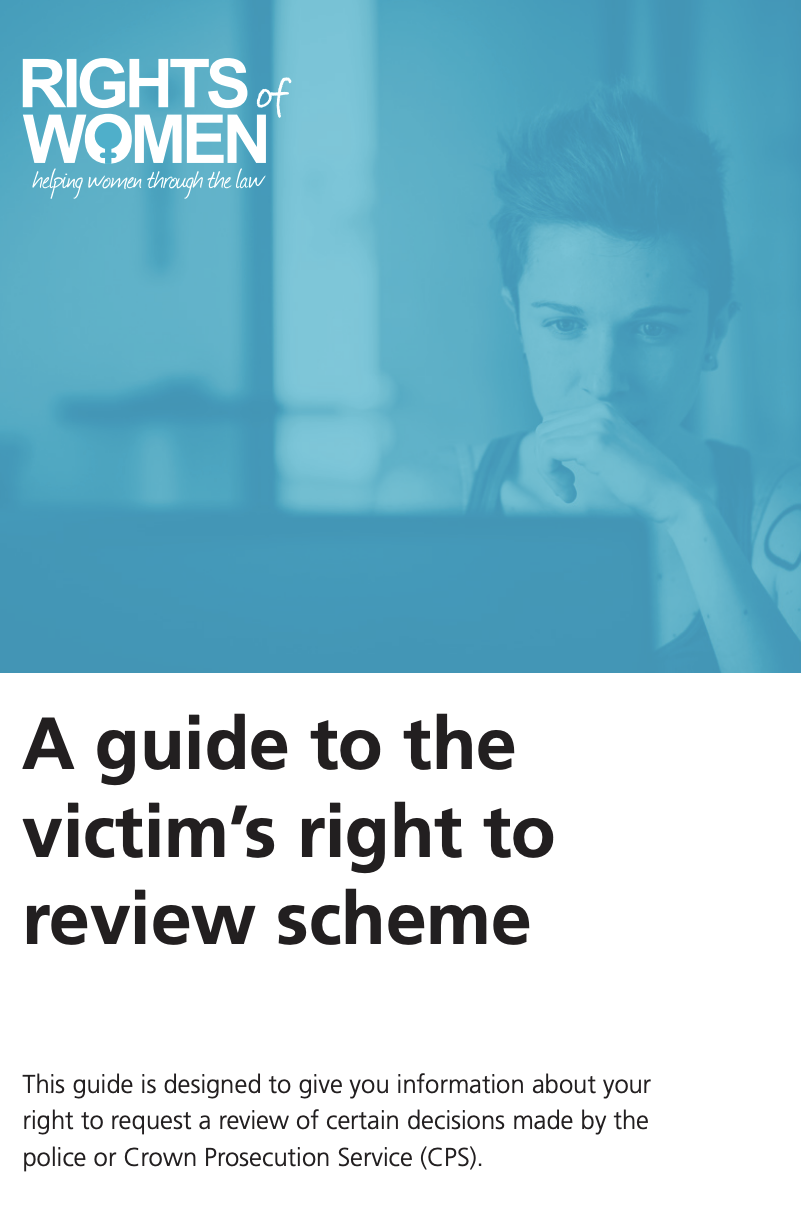
Click on the image to download the user-friendly guide to the VRR scheme from the Rights of Women
In June 2025, a new Victims’ Right to Review (VRR) pilot was launched to test a more timely and accessible way for victims to challenge decisions before cases are formally closed, especially when it comes to closing cases and marking them as ‘no evidence’. Our founder, Jade Blue, has been campaigning for reform since 2020, after her own rape case was erroneously closed by the Crown Prosecution Service - a decision that the VRR later confirmed was wrong. That experience showed how difficult it can be for victims to access accountability once a case has been closed. The pilot represents an important step towards fixing that gap, but it is only a starting point. We will continue campaigning for the VRR pilot to be made permanent, placed on a statutory footing, and rolled out nationally.
This noticeboard feature is informed by guidance from Rights of Women and official Police and CPS VRR policies.