
From Case To Campaign - Oct ‘22
How One Victim’s Right to Review Laid Bare a System Offering Apologies Instead of Justice
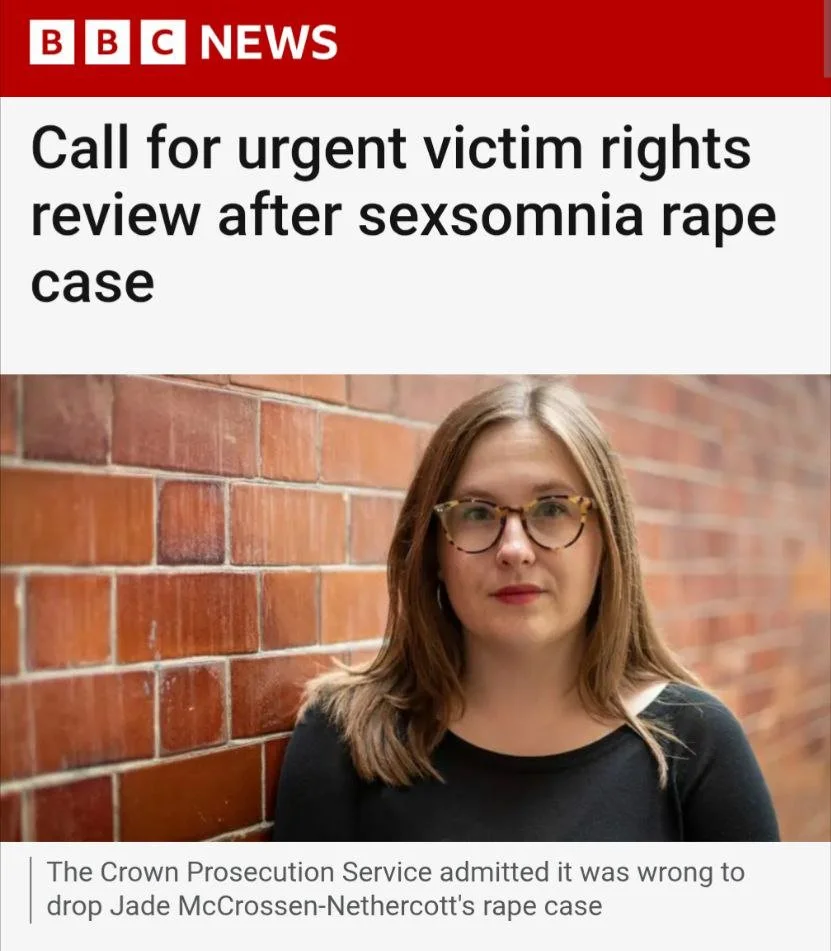
When Jade Blue McCrossen-Nethercott’s rape case was closed in 2020, it wasn’t just a personal injustice - it exposed a structural failure in how victims’ rights were protected once cases were stopped in court.
Two years later, in 2022, Jade’s BBC documentary Sexsomnia: Case Closed? brought that failure into public view. Filmed over three years and aired by the BBC the documentary followed Jade’s fight after prosecutors dropped her case days before trial, relying on a controversial sexsomnia defence.
Crucially, Jade requested a Victims’ Right to Review, which found the original decision to be wrong. An independent prosecutor found her case should have gone to trial and that a jury would have been more likely than not to convict. But because the Crown Prosecution Service had already “offered no evidence”, the defendant was formally acquitted, and the case could never be reopened.
The outcome was devastating: a successful review, an admitted error, and no legal remedy beyond an apology.
Jade’s case was not an anomaly. BBC reporting revealed dozens of similar cases where victims won reviews after proceedings were terminated - only to discover the system offered acknowledgement without accountability. The documentary sounded an early and urgent alarm: a right that arrives too late is no right at all.
In 2022, that warning was clear. Years later, as reforms are debated and pilots emerge, Jade’s case stands as evidence that victims have long been telling the system where it breaks - and what it costs when it refuses to listen.