
Police forces and government departments are jumping on the GTA trend. But when public services are under pressure and confidence in institutions is already fragile, is this really where their energy should be going?
By Jade Blue
The Metropolitan Police, Greater Manchester Police, and even the Foreign, Commonwealth & Development Office, along with the UK Government Instagram page, have joined the latest Grand Theft Auto-inspired social media trend.
The Met has shared a fictional Met Police London game graphic, complete with armed officers, helicopters and police pursuits.
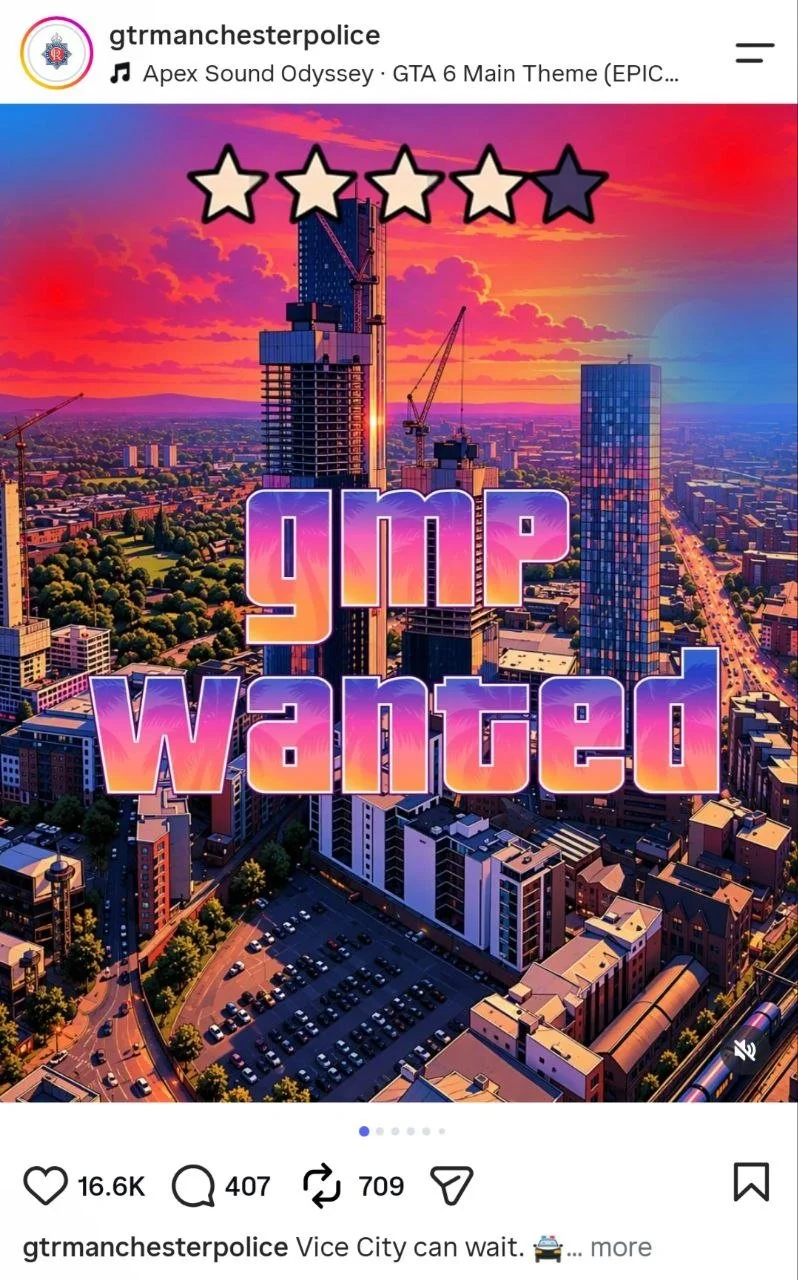
Greater Manchester Police has created GMP Wanted, using the same gaming aesthetic to publicise wanted individuals.
Meanwhile, the Foreign Office collaborated with the UK Government page and has produced Get Travel Advice, borrowing the GTA format to promote travel safety.
Three public institutions. Three attempts to tap into a social media trend. And one question: is this really the best use of public resources?




Who Thought This Was a Priority?
Behind every piece of content is a process. Someone develops the idea, creates the graphics, writes the copy, approves the post and publishes it. These are publicly funded institutions that employ communications teams whose work is ultimately supported by public money.
We don’t know how much these particular posts cost to produce, or whether they were created using existing resources. But that doesn’t make the question of priorities any less relevant.
At a time when police forces face enormous pressure, victims struggle to access justice and confidence in public institutions remains fragile, it’s reasonable to question the judgement behind this content. And yes, public bodies need to communicate. Social media can be an important tool for reaching communities, sharing information and encouraging engagement. But surely there are better ways to do that?
How Are We Supposed to Take This Seriously?
The Metropolitan Police has faced years of scrutiny over its treatment of women, victims of sexual violence and minoritised communities. For those who have experienced institutional failures first-hand, rebuilding trust isn’t an abstract public relations exercise. It’s about being listened to and being taken seriously. It's about having crimes properly investigated and seeing accountability when things go wrong.
So when the same institutions adopt the aesthetics of a video game built around crime and violence, it’s difficult not to question how disconnected they have become from the people they serve.
Greater Manchester Police has gone a step further, turning real wanted appeals into GTA-inspired graphics, complete with star ratings and video game aesthetics.
These are real people, real criminal investigations with real victims. This isn't entertainment, and treating it like a game raises serious questions about judgement and professionalism. Meanwhile, the Foreign Office has joined the same trend to promote travel advice.
Different agencies, different responsibilities, but the same troubling question: how are we supposed to take our public institutions seriously when this is the content they're choosing to produce? And perhaps more importantly, why are publicly funded resources being used to create it? At a time when victims are fighting to be heard, services are stretched, and public confidence is already fragile, the disconnect is staggering.
Public Money. Public Responsibility.
Nobody is suggesting public institutions shouldn’t have creative communications teams. But creativity should serve a purpose beyond attracting likes, shares and comments. When public money is involved, there should be a clear public benefit. And when institutions are struggling to maintain public confidence, every communication should demonstrate an understanding of that responsibility.
For victims and survivors still waiting for answers, accountability or meaningful change, watching public bodies jump on the latest internet trend can feel particularly jarring. We don’t need our institutions to behave like influencers. We need them to function like institutions.
Public confidence isn’t built through viral content. It’s built through competence, transparency, accountability and the everyday treatment of the people these organisations exist to serve. The public deserves better than institutions that seem more interested in keeping up with trends than confronting the serious challenges they face. Public trust is earned and certainly not gamified.