
How To Contact Your MP
You do not need to be a politician to push for change

For many people, contacting an MP can feel intimidating.
You might worry you’ll say the wrong thing.
You might feel like you’re “not informed enough”.
You might feel exhausted by the very systems you’re trying to challenge.
But MPs are there to represent the people who live in their constituency - including you.
Whether you’re raising concerns about the justice system, healthcare, violence against women and girls, housing, discrimination, safeguarding, or a campaign you care about, your voice matters. And lived experience matters too.
What can an MP actually help with?
MPs can:
raise issues with government departments
contact ministers or public bodies on your behalf
ask parliamentary questions
support campaigns
attend debates
table amendments or motions
meet with campaigners and constituents
help highlight issues publicly in Parliament
If they support your cause, they may choose to raise it through debates, written questions, committee work or public statements. MPs can also help with individual casework - especially if you feel you’ve been treated unfairly by a government body or public service.
Find your MP first
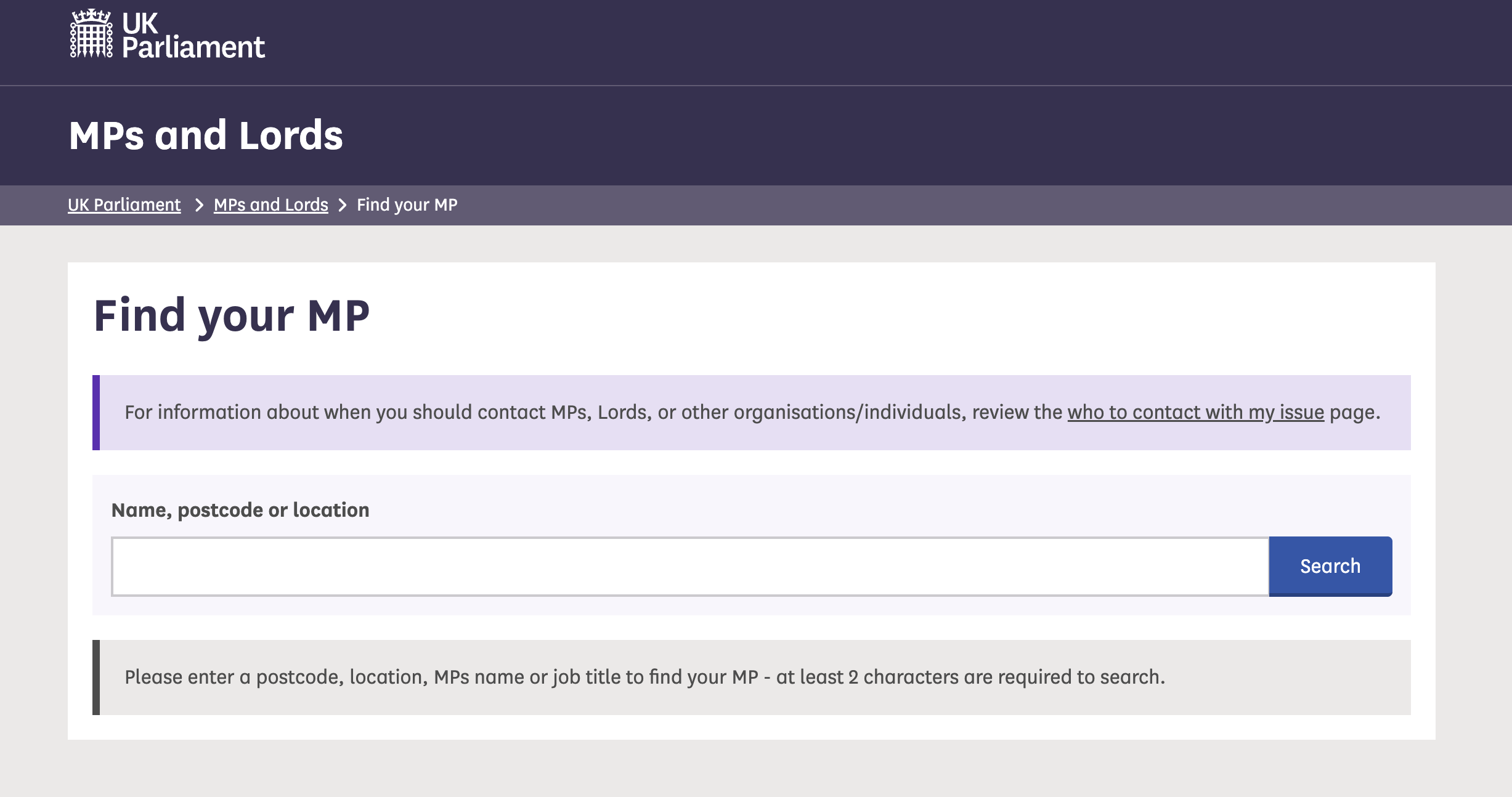
In most cases, MPs will only deal with people who live in their constituency. You can find your MP using your postcode through the UK Parliament website. Once you know who your MP is, you can usually contact them:
by email
by letter
through their website
via their constituency office
at local MP surgeries
Keep it clear, human and concise
One of the biggest misconceptions about writing to MPs is that you need to sound formal or “political”. You don’t. In fact, clear and personal messages are often the most powerful. It’s important to keep correspondence:
brief
clear
easy to follow
grounded in real impact
MPs receive huge amounts of correspondence every week. Long emails full of technical language can sometimes lose impact.
Try to focus on:
why the issue matters
how it affects people
what action you want your MP to take
Personal stories can shift perspectives
Statistics matter. Policy matters. But lived experience often cuts through in a different way.
If you feel emotionally safe sharing part of your experience, it can help an MP understand the real-life impact of a policy, failure or injustice in a way reports alone often cannot. That does not mean you owe anyone your trauma.
You are allowed to:
keep boundaries
stay anonymous publicly
share only what feels safe
speak generally rather than personally
Your voice still matters.
Researching your MP can genuinely help
Before reaching out, it can help to:
look at what your MP has spoken about before
check whether they’ve supported similar campaigns
see if they sit on a relevant committee or APPG
reference previous work they’ve done
This can make your message feel more targeted and increase the likelihood of engagement.
For example: “I saw you previously spoke about violence against women and girls in Parliament…” Small details like this can make your email stand out. We have an upcoming feature which also provides insight about Hansard, which is the official written record of everything said in Parliament, including debates, questions and speeches by MPs and Lords and evidence sessions.
Be clear about what you are asking for
A strong email usually ends with a clear action. For example, you could ask your MP to:
raise an issue in Parliament
meet with you
write to a minister
support a campaign
attend an event
ask a parliamentary question
support an amendment or bill
meet with survivors or stakeholders
It is important to note that your correspondence should make a specific ask rather than only raise awareness. People are often surprised by how many practical routes MPs have to apply pressure or raise issues publicly.
If your MP doesn’t reply
MPs often receive a very high volume of emails. If you haven’t heard back after around two weeks, it is completely reasonable to:
send a follow-up email
phone their office
ask about constituency surgeries
request an update politely but firmly
Following up is not “being annoying”. It is advocacy.
Looking after yourself matters too
Engaging with politics, campaigning, or justice reform can be emotionally draining - especially when it relates to your own lived experience. You do not have to become a full-time campaigner to deserve to be heard. Sometimes, making your voice heard looks like:
sending one email
signing one letter
attending one meeting
sharing one experience
supporting one campaign quietly in the background
That still matters. Real change is often built from many people deciding to speak up in small but meaningful ways.
A final reminder
Parliament can feel distant. Formal. Difficult to navigate.
But MPs are elected to represent the public - not just professionals, organisations or people already confident in political spaces.
You are allowed to contact them. You are allowed to raise concerns. And you are allowed to expect your voice to matter.