
The European Convention on Human Rights
The Human Rights Law That Helped Me Challenge The CPS
By Jade Blue
For a long time, I thought human rights law was something distant. Political. Abstract. Something that happened in courtrooms far away from ordinary people.
I never imagined it would become part of my own life.
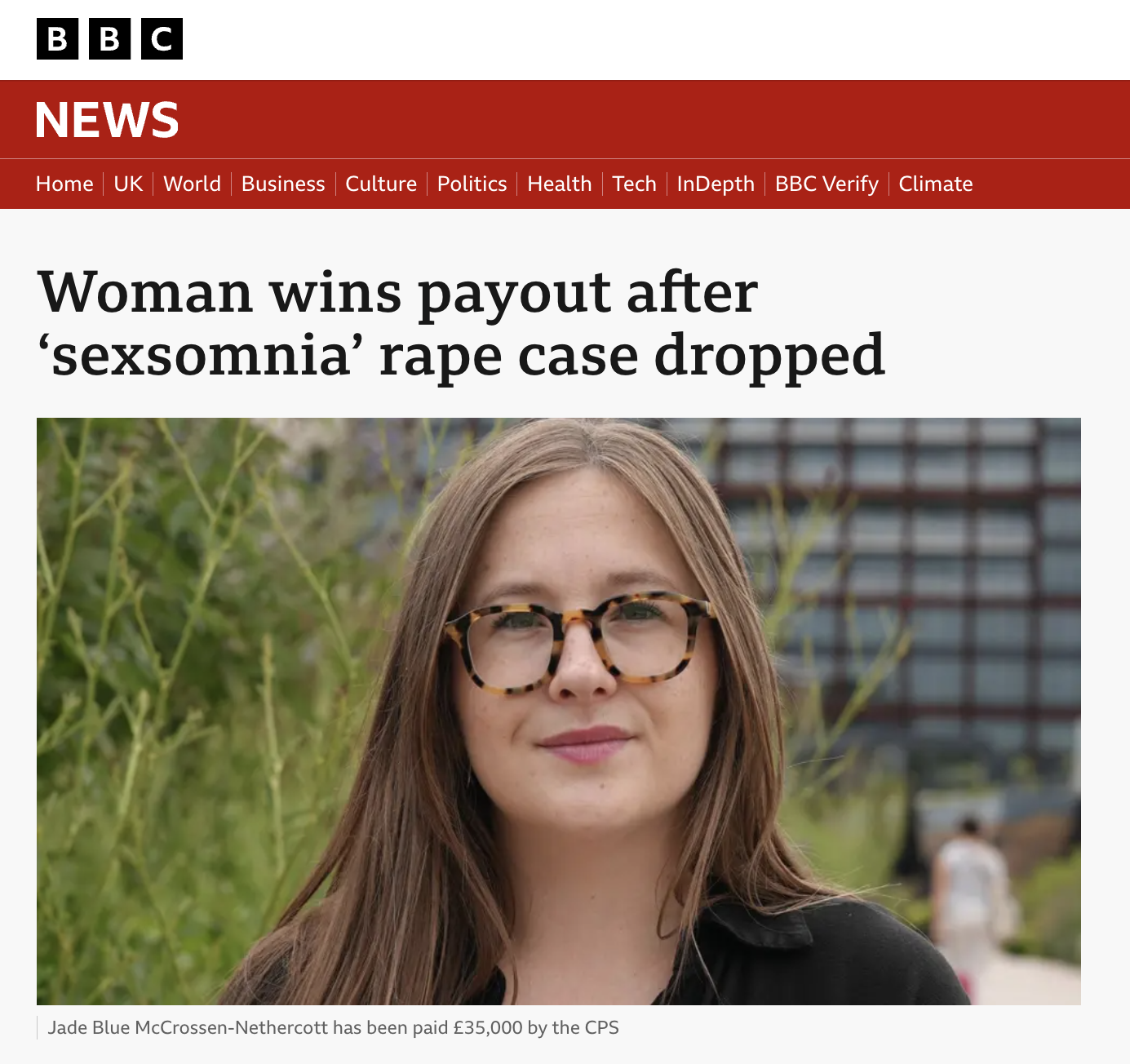
But after the Crown Prosecution Service decided to offer no further evidence only days before trial, resulting in the defendant being formally acquitted, the European Convention on Human Rights (ECHR) became one of the few routes left to me.
Eventually, I brought a human rights claim against the CPS through the Centre for Women’s Justice. The case was later settled, and I received 35k from the CPS in damages.
But the experience completely changed how I understand the importance of human rights law - particularly for victims and survivors failed by institutions meant to protect them.
What Is The ECHR?
The European Convention on Human Rights (ECHR) is an international human rights treaty created after the Second World War.
The UK was one of the countries involved in drafting it.
The Convention protects a range of fundamental rights, including:
the right to life;
the right to privacy;
freedom of expression;
the right to a fair trial;
and freedom from torture and inhuman or degrading treatment.
In the UK, many of these rights are given effect through the Human Rights Act 1998, which allows UK courts to consider Convention rights in domestic cases.
In some circumstances, public authorities - including police forces and prosecutors - can be challenged under human rights law for serious failings. And that matters more than many people realise.
The Article That Changed Everything For Me
One of the most important protections for survivors is: Article 3
The right to freedom from torture, inhuman or degrading treatment. Article 3 is one of the most fundamental protections within the ECHR.
Over time, courts have recognised that Article 3 is not only about direct violence itself. It can also apply where there are serious failures by public authorities in responding to or investigating certain forms of violence and abuse. That includes failures to properly investigate serious crimes like rape and sexual assault.
In practice, this means police and other public authorities can have duties to investigate survivors’ reports effectively and appropriately.
When investigations collapse.
When victims are ignored.
When systemic failures cause further harm.
When authorities fail in their duty to properly respond to violence against women and girls.
For me, that understanding changed everything. Because sometimes the harm does not end with the offence itself. Sometimes the system becomes part of the trauma, too.
The Case That Changed The Conversation: Worboys
Long before my own case, other women had already fought to establish these principles.
One of the most important examples was the case involving John Worboys - often referred to as the “Black Cab Rapist”. Two survivors, known publicly as DSD and NBV, experienced serious failings in how the Metropolitan Police investigated their reports.
As later highlighted publicly - including in ITV’s Believe Me - those investigative failures allowed Worboys to continue offending against multiple women. The survivors relied on Article 3 of the European Convention on Human Rights.
They approached the Centre for Women’s Justice and solicitor Harriet Wistrich, who helped them bring legal action against the Metropolitan Police under the Human Rights Act.
Their argument was groundbreaking:
that severe police failures in investigating violence against women could amount to a breach of Article 3 human rights protections.
And in 2018, the European Court of Human Rights agreed.
The Court found that the investigation involved significant failures and that those failures breached the women’s human rights. That ruling mattered enormously.
Because it recognised something survivors had known for years:Investigative failures can become human rights failures too.
The case became one of the most important legal precedents for holding institutions accountable in violence against women and girls cases.
Why This Matters Beyond My Case
Human rights law is often spoken about in political soundbites. Sometimes people claim the Human Rights Act only “protects criminals”. But cases like Worboys show something very different.
The Human Rights Act and the ECHR can also be among the few legal routes available to victims and survivors seeking accountability for serious institutional failures. For many survivors, the ECHR becomes relevant only after everything else has already gone wrong.
After:
failed investigations;
collapsed prosecutions;
institutional indifference;
retraumatising systems;
or decisions that leave victims feeling abandoned.
The ECHR does not erase trauma. But it can create accountability. It can force institutions to answer difficult questions. And sometimes, it can help push systems toward change.
My own case against the CPS was never just about compensation. It was about recognition. Recognition that serious institutional decisions can have devastating consequences for victims and survivors - and that those decisions should not exist beyond scrutiny.
Why We Must Protect The ECHR
The ECHR is not just legal paperwork or political debate. For many survivors, it is one of the few safeguards that exists when institutions fail.
It has helped establish accountability in cases involving:
violence against women and girls;
investigative failures;
abuse;
discrimination;
and systemic injustice.
Without protections like these, the ability to challenge powerful institutions becomes weaker. And for people who have already been failed by the system, that should concern all of us.
The Human Rights Act exists to protect everyone. The ECHR does not make institutions perfect. But it helps ensure they are not beyond challenge. And that matters.
Know Your Rights
Many people do not realise that public authorities can potentially be challenged under human rights law.
That includes:
police forces;
prosecutors;
prisons;
NHS bodies;
and local authorities.
If you believe a public authority seriously failed you:
document everything;
keep records where possible;
seek specialist legal advice;
and know that serious institutional failures can sometimes go beyond complaint procedures alone.
You are allowed to ask institutions questions. Even when those institutions would prefer silence.