
A Different Kind of Court Support
Madrid’s use of support dogs for vulnerable victims raises an important question - could trauma-informed measures like this help transform the experience of giving evidence in UK courts?
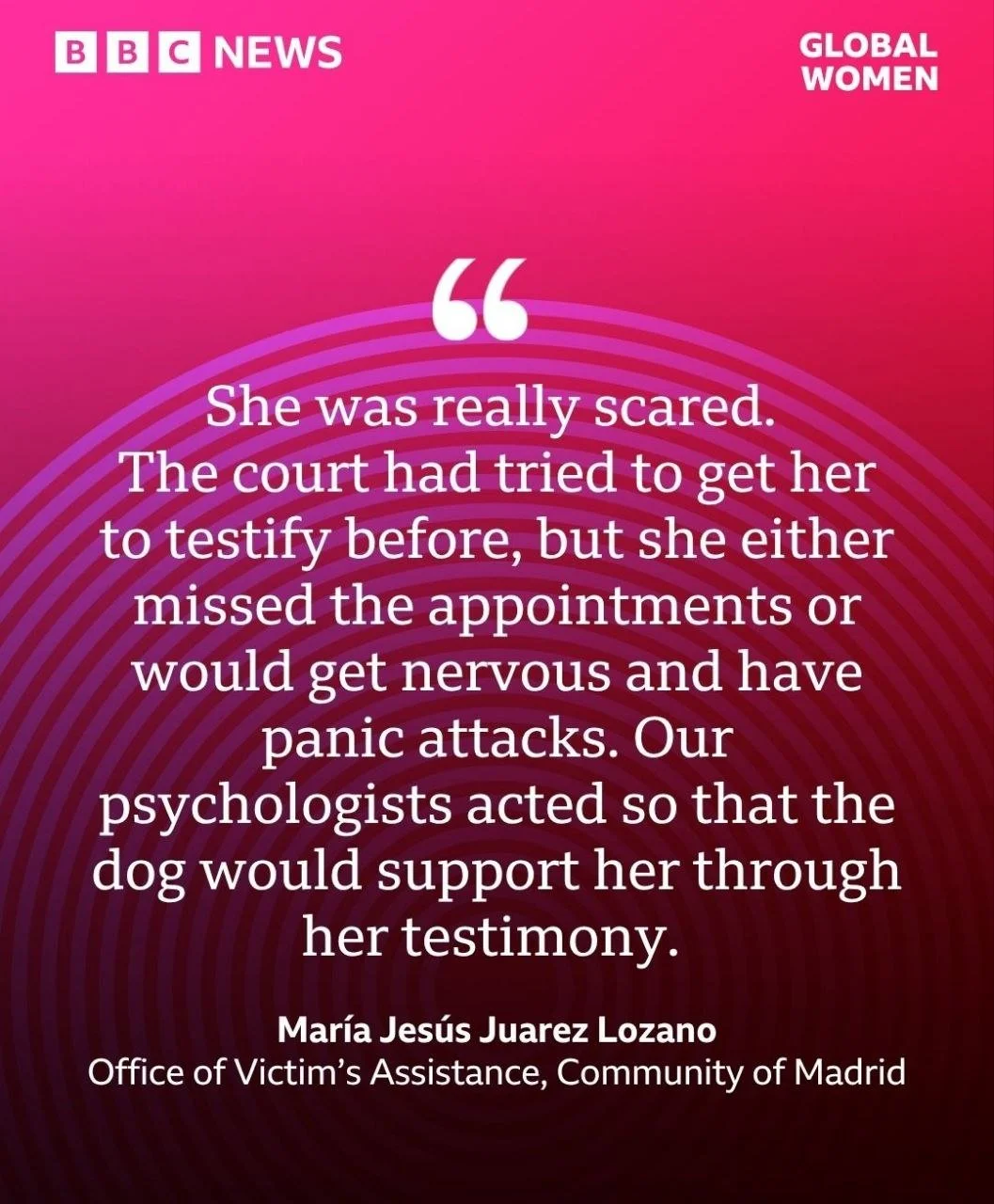
In Madrid, a 14-year-old Labrador named Eika recently became the first therapy dog used to support an adult woman during the final stages of a criminal court case.
The woman, identified only as P., had reportedly experienced panic attacks in the presence of her former partner, who was accused of gender-based violence and breaching a restraining order. Authorities introduced Eika to help regulate her anxiety and support her through the process of giving evidence.
According to psychologists involved in the programme, the dog’s calm presence and slow breathing helped her recompose herself and continue with her testimony.
For many survivors and vulnerable witnesses, the courtroom itself can feel deeply retraumatising.
Giving evidence often means recounting traumatic experiences in highly formal, intimidating environments - sometimes while sitting metres away from the person accused of harming you. For people living with trauma, anxiety, neurodivergence, learning disabilities, or other vulnerabilities, the process can become overwhelming long before a verdict is ever reached.
That is why this initiative feels so significant.
While therapy and justice dogs have been explored in countries including the US, Australia and parts of Europe, their use remains relatively limited and inconsistent in the UK justice system - particularly for adult victims.
But the wider principle matters: what would it look like if our justice processes were designed not only around procedure, but around people?
Trauma-informed justice is often discussed in policy circles, but practical measures like this show what it can mean in practice. Sometimes support is not only legal representation or special measures on paper - sometimes it is creating conditions where someone feels safe enough to speak at all.
This is not about undermining fairness or due process.
It is about recognising the emotional and psychological realities of giving evidence after trauma, and understanding that supporting vulnerable people to participate in the justice system benefits everyone.
At Make Yourself Heard, we often speak about the gap between policy language and lived experience. Stories like this remind us that small, compassionate interventions can have a profound impact.
Perhaps it is time for wider conversations in the UK about what meaningful support in our courts could - and should - look like.