
No More Dodging Sentencing
New powers will punish offenders who refuse to attend sentencing, marking a significant victory for families whose campaigning has helped change the law
Offenders who refuse to attend their sentencing hearings in England and Wales could face tougher prison sanctions under new rules the Ministry of Justice announced on 22 October.
The reforms will give Crown Court judges additional powers to restrict prison privileges, limit social visits and impose cellular confinement on offenders who refuse to appear before the court.
For victims and their families, sentencing is more than a legal formality. It is an opportunity to deliver victim personal statements, hear the court’s decision and see those convicted held accountable.
When offenders refuse to attend, that opportunity can be taken away.
What is changing?
Under the new measures, judges will be able to impose:
Loss of prison privileges for up to 84 days.
Cellular confinement for up to 21 days.
Loss of social visits for up to 27 days.
Restrictions on social visits for up to 84 days.
The changes build on existing powers allowing courts to impose fines or up to two additional years’ imprisonment for contempt of court.
The new sanctions are expected to take effect in 2027, following the parliamentary process.
A victory driven by families
Behind this reform are years of determined campaigning by families who refused to accept that offenders could simply avoid attending sentencing.
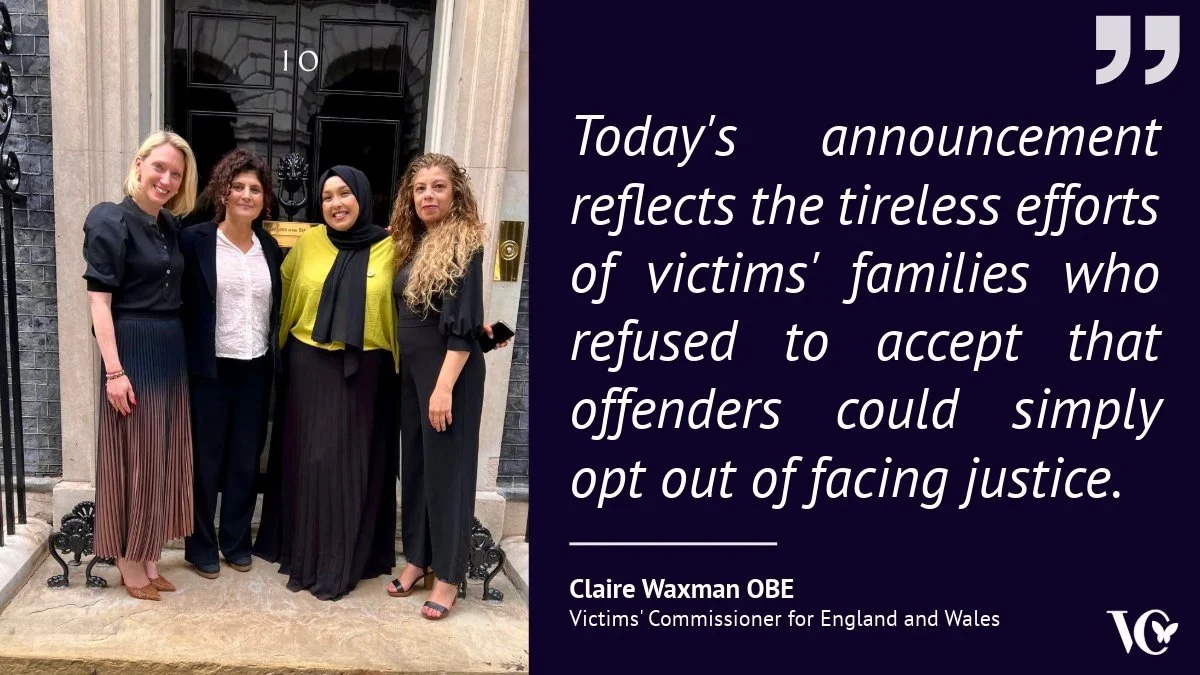
Jebina Islam, sister of Sabina Nessa; Farah Naz, aunt of Zara Aleena; and Ayse Hussein, cousin of Jan Mustafa, have been central to calls for change, alongside the family of nine-year-old Olivia Pratt-Korbel.
Their campaigning has highlighted the additional harm caused when offenders refuse to hear the impact of their crimes.
Victims’ Commissioner Claire Waxman OBE welcomed the announcement, recognising the families’ tireless efforts and calling for the powers to be applied consistently.
Their determination is a powerful reminder that lived experience can challenge established practices, influence decision-makers and deliver meaningful justice reform.
Reform must deliver in practice
The announcement is welcome, but stronger sanctions alone cannot guarantee attendance.
Their effectiveness will depend on consistent implementation, appropriate safeguards and whether they genuinely reduce the additional distress experienced by victims and families.
At Make Yourself Heard, we believe the way the justice system treats victims matters at every stage, including the final moments of a criminal trial.
Justice should never leave victims and families feeling that accountability is optional. This reform represents meaningful progress. Above all, it belongs to the families whose persistence helped make it possible.
Their voices were heard. The law is changing. Now those changes must deliver.