
Rape Cases Rise Up the Priority List
A new national approach aims to reduce devastating delays for victims of rape and serious sexual offences

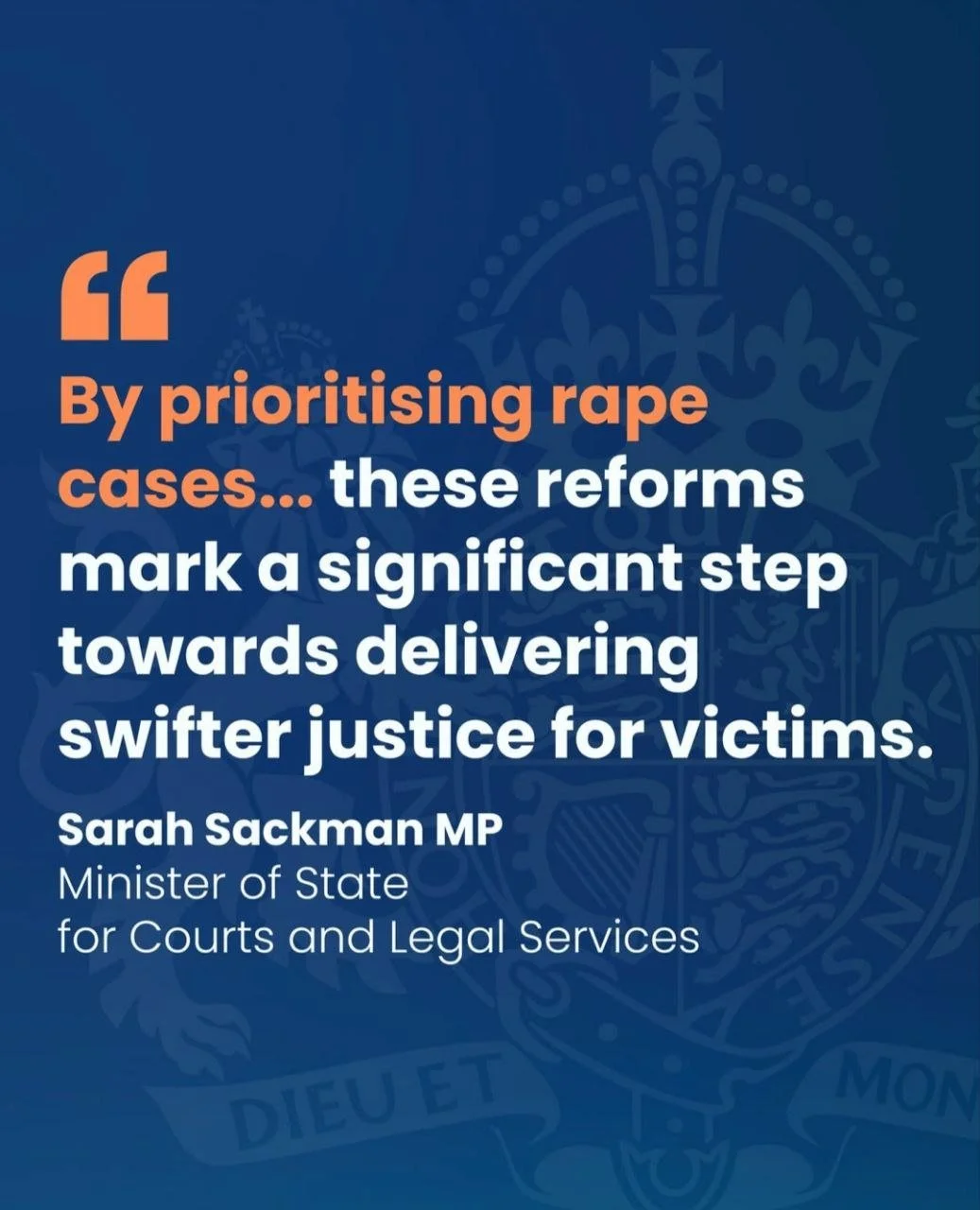
A significant reform to the way criminal trials are scheduled was announced relatively quietly last month.
From October 2026, rape and most other serious sexual offence cases will ordinarily be placed in the second-highest tier of priority when Crown Court trials are listed across England and Wales.
It is an important recognition of something survivors have been saying for years: delay is not simply an administrative problem. It has a human cost.
Behind every case number is a person trying to keep working, maintain relationships, recover from trauma and somehow carry on while waiting for a court date that may still be years away.
Years spent waiting
For many survivors, reaching the point of trial already follows a long and exhausting process.
They may have waited months or years for an investigation to conclude, for a charging decision to be made and for a case to enter the court system. Once a trial date is finally set, there is still no guarantee it will go ahead.
Cases can be postponed at short notice because a courtroom, judge or barrister is unavailable, or because the trial is not ready to proceed. Survivors may prepare themselves emotionally for court, arrange time away from work and reorganise childcare or caring responsibilities, only to be told that the hearing has been delayed again. That uncertainty can be devastating.
Lives are placed on hold. Recovery becomes tied to a timetable the survivor cannot control. Each postponed date can mean having to prepare for the process all over again.
What is changing?
Under the new national framework, judges will be directed to consider the human impact of delay when deciding the order in which cases should be heard.
Cases involving rape and other sexual offences will ordinarily be placed in tier two of a seven-tier system, immediately below cases involving a death or a participant considered highly vulnerable.
All 77 Crown Court centres across England and Wales will be expected to develop local listing plans that follow the same national approach.
Courts will also be required to use a more structured pre-trial process, intended to ensure that cases are only given trial dates when they are ready - or genuinely expected to be ready - to proceed.
The aim is not only to move serious sexual offence cases higher up the list, but to reduce the number of trials that collapse or are postponed on the day.
Why this matters
The impact of court delays cannot be measured only in months or years.
It can be found in the survivor who cannot make plans because they do not know when they will be expected to give evidence.
It can be found in the person whose mental health deteriorates each time a trial date approaches.
It can be found in the repeated need to revisit what happened, prepare to speak about it publicly and then return home without the case having moved forward.
Prioritising these cases sends a necessary message: the damage caused by delay is real, and it must be taken seriously.
But survivors should never have needed to wait this long for the system to recognise it.
Priority on paper must mean change in practice
This reform is a meaningful step, but a higher position on a court list cannot solve the wider crisis on its own.
The criminal justice system continues to face severe backlogs, alongside shortages of courtrooms, judges, barristers and other essential staff. Without the resources needed to hear cases, a new priority framework risks becoming another promise that survivors cannot feel in practice.
The real test will be whether rape and serious sexual offence trials are genuinely heard sooner, whether last-minute postponements decrease and whether survivors are kept properly informed throughout the process.
There must also be transparency about how the framework is being implemented across different courts. Survivors should not face another postcode lottery in which the speed of justice depends on where their case is heard.
Long overdue - and important to watch
For too long, the justice system has expected survivors to absorb the consequences of its delays.
They have been asked to wait, remain available and repeatedly prepare themselves for a process that may be postponed without warning.
Moving rape and serious sexual offence cases higher up the Crown Court priority list is an important acknowledgement of that harm.
But recognition must now be followed by delivery.
Survivors do not need another announcement that sounds promising on paper. They need court dates that hold, cases that move forward and a justice system that understands their lives cannot remain suspended indefinitely.