
Calls to tackle rape myths in our courtrooms have sparked a troubling response online, reinforcing why meaningful reform is so urgently needed
On 6 November, Victims’ Commissioner, Claire Waxman OBE, called for the Courts and Tribunals Bill to require judges to address rape myths when directing juries in every rape trial.
Her message was straightforward: justice should be based on evidence, not myths and false assumptions about trauma.
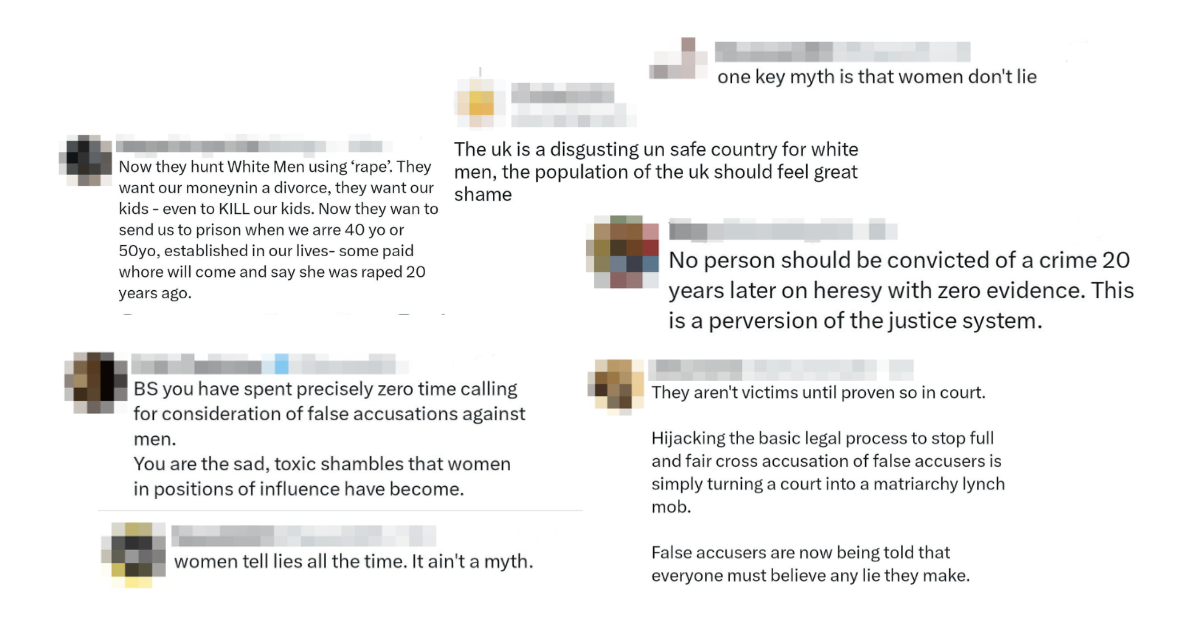
It should hardly be controversial. Yet beneath her post on X, the responses told a troubling story.
Women were accused of lying, seeking revenge, and deliberately destroying men’s lives. Some commenters questioned why rape allegations should be taken seriously years after an incident. Others used sexually degrading language about women involved in the Russell Brand case.
One commenter described addressing rape myths as a special privilege. Another suggested that women should not be considered victims unless a court had established guilt. There were even calls to introduce time limits on reporting rape, as though the passage of time somehow determines whether sexual violence occurred.
Among the responses were openly misogynistic remarks, personal attacks and sweeping accusations against women that had little to do with the proposed reform. These comments do not represent everyone. But they offer a stark reminder of the attitudes survivors can encounter when they speak out.
The Very Myths We Need to Challenge
The argument for addressing rape myths is not about removing scrutiny, weakening the presumption of innocence or compromising a defendant’s right to a fair trial. It is about ensuring that evidence is assessed without relying on assumptions about how someone should behave before, during or after sexual violence.
Why didn’t they fight back?
Why did they maintain contact?
Why did they wait to report?
Why had they previously consented to sexual activity?
These questions can become incredibly misleading when the answers are judged against an imagined ‘correct’ response to rape. There is no single, universal response to trauma. Delayed reporting does not automatically undermine credibility. Previous consensual sexual activity does not establish consent to a subsequent act.
None of this means that evidence should go unchallenged. It means that challenges should be grounded in relevant facts rather than stereotypes.
When Rape Myths Enter the Courtroom
Among those supporting Claire Waxman’s call was Charlotte, a survivor who shared her own experience of giving evidence at trial. Charlotte described being called promiscuous and flirtatious, and being questioned about why she had waited eight months to report.
Her contribution is an important reminder that this debate is not simply theoretical. For survivors like Charlotte, these are not abstract discussions about courtroom procedure. They are questions and characterisations they have personally encountered while seeking justice.
And the responses to her post were equally revealing, with some commenters dismissing her experience or suggesting that challenging such assumptions would undermine defendants’ rights. But challenging rape myths does not mean preventing legitimate questions from being asked. It means recognising when questions rely on stereotypes rather than evidence.
A person’s sexual history, perceived promiscuity or delay in reporting should not automatically determine their credibility. Survivors should not have to defend their character to establish whether a crime took place.
Charlotte’s experience reinforces why this reform matters. Judicial safeguards must be more than words on paper. They must meaningfully change how evidence is presented, challenged, and understood.
Who Is Challenging the Myths in Court?
Another question we must ask is: what responsibility do legal professionals in the courtroom have?
Rape myths do not always originate with jurors. They can be introduced or reinforced through how evidence is presented, witnesses are questioned, and arguments are framed.
Barristers have a duty to challenge evidence where appropriate and represent their clients effectively. But robust cross-examination should not provide a free pass for irrelevant, humiliating or stereotype-driven questioning. And judges have a crucial responsibility to intervene.
It should not fall to survivors to challenge harmful assumptions while they are giving evidence, particularly when they are already navigating an intimidating and deeply personal process. Judicial directions to juries matter. But so does what happens before those directions are delivered.
What good is challenging a rape myth at the end of a trial if it has already been allowed to shape the questioning throughout? We need consistent judicial intervention, appropriate professional training and accountability for how sexual violence cases are conducted. Fair trials require robust scrutiny. They do not require prejudice to go unchallenged.
Fair Trials and Challenging Rape Myths Are Not Opposing Principles
Perhaps the most revealing aspect of the online backlash is the suggestion that addressing rape myths somehow threatens the rights of defendants. It does not.
The prosecution must still prove its case beyond reasonable doubt. Defendants retain the right to challenge evidence, and juries must consider that evidence impartially. Challenging rape myths does not weaken these fundamental safeguards. It helps ensure that decisions are not influenced by misconceptions about sexual violence.
Judicial directions addressing myths and stereotypes already exist, but the question is whether they go far enough. Recognising that trauma responses vary does not establish that an allegation is true. It simply means that someone's credibility should not be judged against preconceived expectations of how a victim should behave.
A fair trial must protect against wrongful conviction and decisions distorted by prejudice. These principles are not in conflict. They are fundamental to justice.
The Cost of Speaking Out
The timing of this discussion matters. Following the Russell Brand trial, Rape Crisis England & Wales CEO Ciara Bergman highlighted how questions about delayed reporting, maintaining contact and not physically resisting were raised during proceedings.
She also drew attention to the significance of a conviction in a case involving previous consensual sexual activity. The wider conversation should be about evidence, consent and the fair treatment of everyone involved.
Instead, some of the responses online have descended into personal attacks, sexual humiliation and sweeping accusations against women. Imagine being someone considering reporting sexual violence and reading those comments. Imagine already fearing that you will not be believed, only to see strangers publicly ridicule women who have participated in the justice process.
We cannot know whether any particular comment will deter someone from reporting. But the potential chilling effect of such hostility deserves serious consideration, particularly when shame, fear of disbelief and negative publicity are already recognised barriers.
And it raises an uncomfortable question. If this is how some people speak about survivors in public, what assumptions might they carry into a jury room?
This Is Why Reform Matters
The comments beneath Claire Waxman’s post do not prove that every jury is influenced by rape myths. Nor do they mean that everyone questioning a proposal for reform is acting in bad faith. There is room for legitimate debate about how judicial directions should work, what they should contain and how to preserve the rights of everyone involved.
But there is an enormous difference between scrutinising a proposed law and attacking women for reporting sexual violence. That distinction matters.
The justice system cannot control every comment posted online. It can, however, take meaningful steps to ensure that myths and stereotypes are identified and addressed within court proceedings. That means appropriate judicial directions, effective training, timely intervention when inappropriate questioning arises and a continued commitment to evaluating whether existing safeguards work in practice.
Survivors should not have to overcome society’s misconceptions before their evidence can be fairly considered. And defendants should be judged on the evidence, not public prejudice in either direction.
The response to Claire Waxman’s proposal demonstrates why this conversation cannot be avoided. We cannot claim to value evidence-based justice while allowing harmful assumptions to go unchallenged.