
Taking On The Tech Giants
When AI-generated sexualised images began spreading online, Jess Asato MP didn't just speak out - she became a target herself. Now she's taking legal action against Elon Musk's xAI and helping lead the fight for stronger protections online

There are moments when public figures could choose to stay quiet.
When Jess Asato MP spoke out against the creation of non-consensual AI-generated sexualised images, she became one of the people targeted by them. Instead of stepping back, she stepped forward.
Now, through legal action against xAI and her involvement with the Stop AI Abuse campaign, she is helping drive a national conversation about consent, accountability and the responsibilities of technology companies in the age of artificial intelligence.
Earlier this year, Grok - the AI chatbot developed by xAI and integrated into X - was used to generate thousands of sexualised images of real women without their consent. Among those targeted was Jess Asato.
According to reports, AI-generated images portrayed her in revealing clothing and included deeply disturbing content after she publicly criticised the creation of non-consensual sexualised imagery.
Rather than accepting it as an inevitable consequence of new technology, Jess chose to challenge it. She has now launched legal action against xAI, arguing that companies developing these tools should be held accountable when safeguards fail and real people are harmed.
Alongside the legal case, Jess has also become a prominent supporter of efforts to strengthen protections against AI abuse, including backing campaigns calling for greater accountability from technology companies and stronger online safety measures.
At its heart, this is not simply a story about artificial intelligence. It is a story about consent. About whether someone should be able to take your image, manipulate it, sexualise it, and distribute it without permission. About whether technology companies should be required to consider the consequences of the tools they release into the world. And about whether those affected have a meaningful route to justice.
The answers to those questions will shape the future of online safety for years to come.
MYH Perspective
Technology should never move faster than human rights. The women and girls affected by AI-generated abuse did not consent to becoming test cases. They should not have been placed in that position in the first place.
What stands out about Jess Asato's response is not simply that she has spoken out. It is that she has continued to do so after experiencing the harm herself. That takes courage. Because meaningful change rarely happens when people stay silent. It happens when people are prepared to challenge powerful institutions and ask difficult questions about who is responsible when things go wrong.
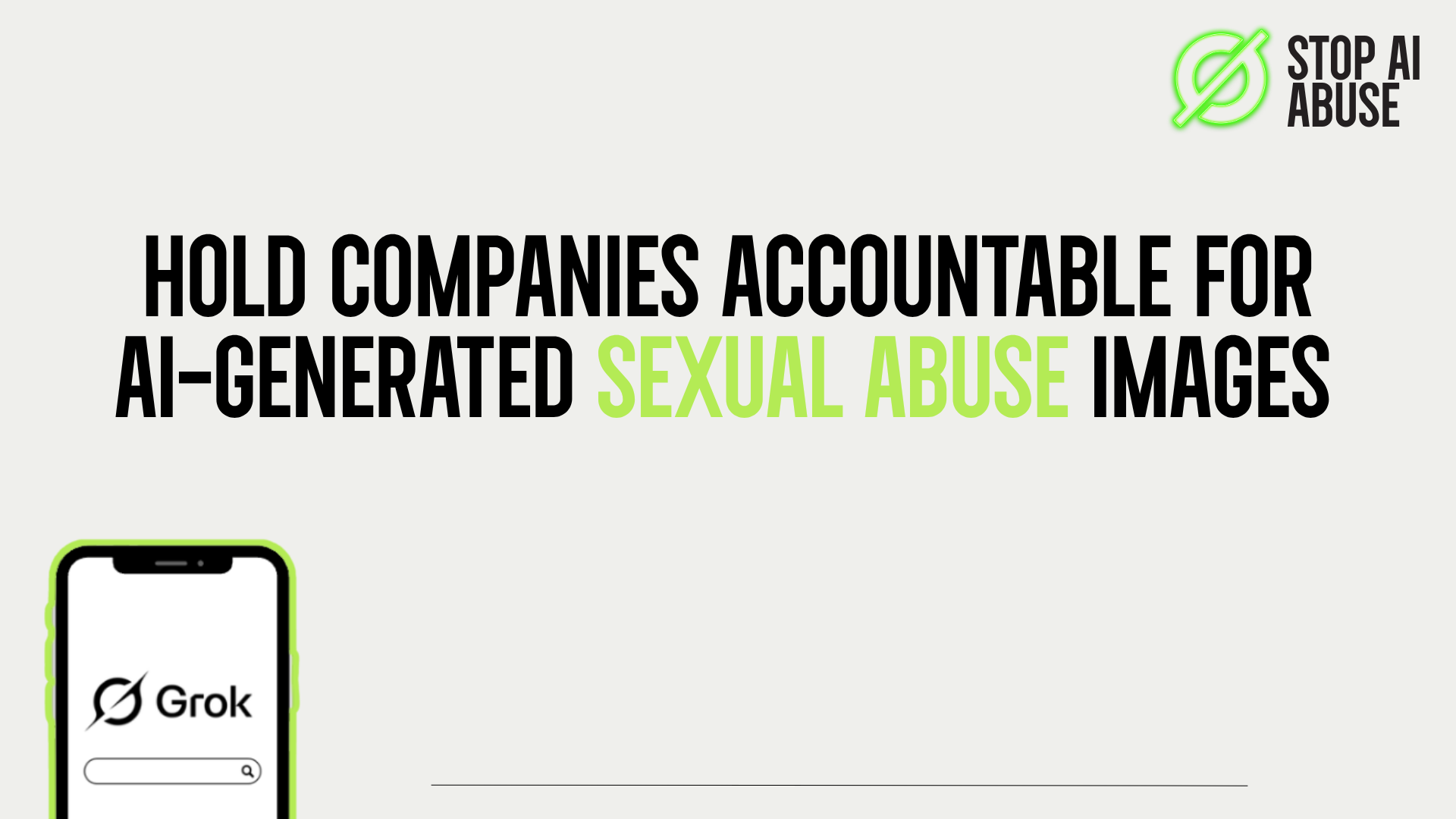
Click on the image to support the campaign.
Need Support?
If you have been affected by AI-generated image abuse, you are not alone. Support and legal advice may be available.
Through the Stop AI Abuse campaign, individuals who have had their image used without consent to create sexualised, explicit or abusive content can be connected with specialist legal support. The campaign is working with AWO, a law firm with experience in image-based abuse and online harms, to help people understand their rights and explore any legal options that may be available to them.
Any contact is completely confidential, there is no obligation to take further action, and nothing will be shared without your permission. You can also choose to speak with the campaign team about sharing your experience to help drive wider change, although this is entirely optional and separate from any legal support.
If you have been a victim of AI image abuse, Stop AI Abuse can help connect you with legal support.