
Don’t Feel Sorry for Us
It is disappointing to hear the Criminal Bar Association suggest that survivors supporting jury trial reform have been misled. We are capable of weighing the evidence and reaching our own conclusions
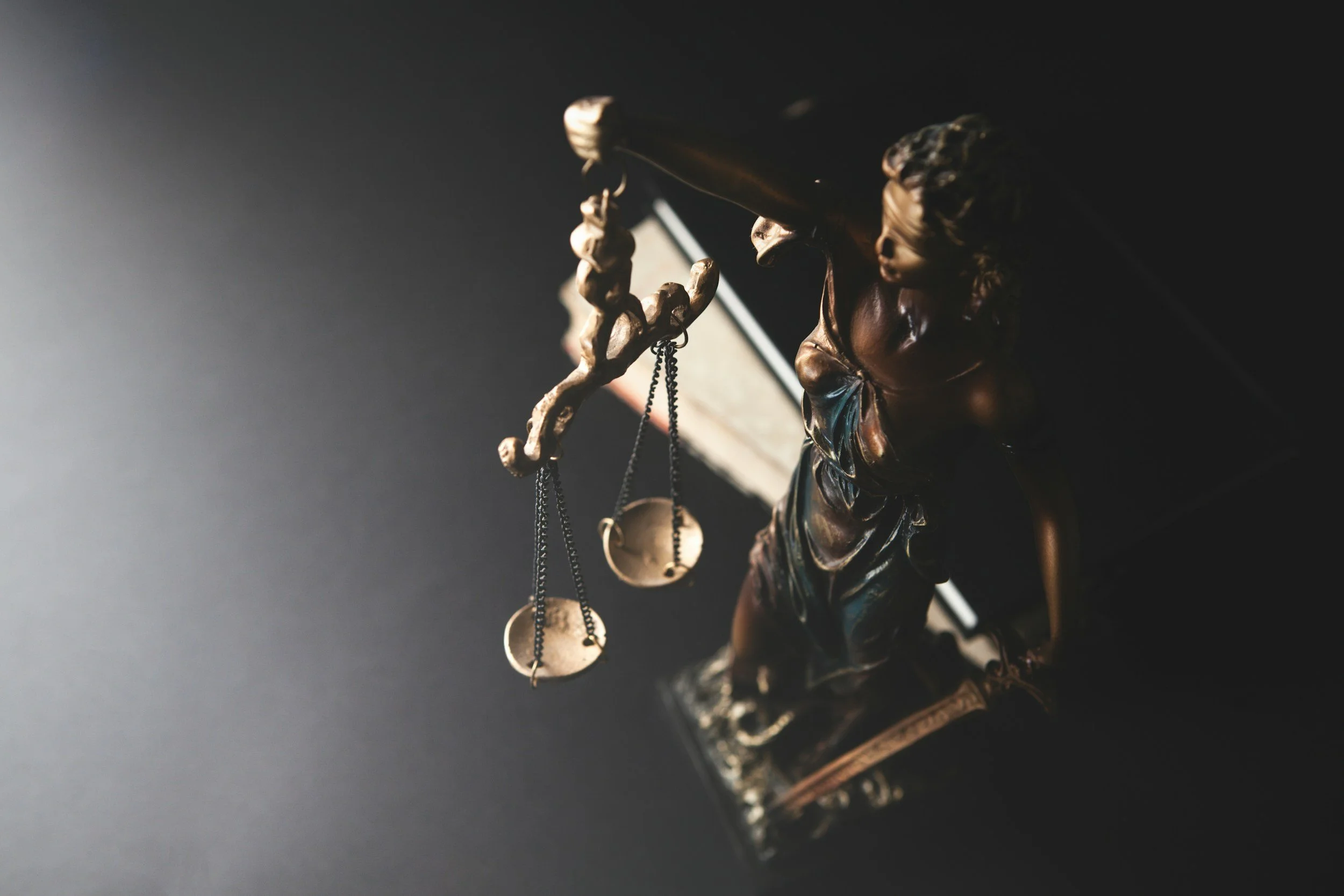
An important debate is underway about the future of our criminal courts. But another question remains: who gets treated as an expert in that debate, and whose experience is reduced to something to sympathise with?
Speaking to The Times, Criminal Bar Association Chair Andrew Thomas KC criticised proposals to restrict jury trials, arguing that they would make only a small difference to court delays. Referring to victims’ groups supporting reform, he said: “I feel really sorry for the victims’ groups.” That language landed badly.
Open Justice For All responded:
“You do not have to ‘feel sorry for us’. We are highly intelligent women who make our own decisions based on fact, data and expert input.”
Charlotte Meijer was similarly clear:
“I am not a silly little girl who is being played. I make up my own mind.”
Vicki Crawford said there was:
“a touch of ‘children should be seen and not heard’ about this.”
And Jade Blue added:
“As survivors, we are more than capable of weighing the evidence, listening to experts and reaching our own informed views on justice reform.”
That is the point. No single victim view exists on jury trials. Nor should there be. Some survivors support these reforms. Others oppose them. Others will agree with parts and question others. Disagreement is not evidence that survivors have been misled.
Is 1–2% really the end of the argument?
Thomas told The Times that, by his calculation, the proposed changes would make only around a 1–2% difference to the overall duration of delays, and argues that the policy is fundamentally about cost-cutting rather than tackling the backlog.
Critics are entitled to question whether a change to jury trial rights is proportionate to that potential impact. But there is another way of looking at the figure.
For those supporting reform, a measure does not necessarily have to fix the entire backlog by itself to contribute to improvement. If several changes each remove a small amount of pressure from an overstretched system, those gains can accumulate.
The Government’s case is based on a wider package of reforms - not jury changes alone - which it says could reduce demand on Crown Court time by almost 20%. That projection, and the assumptions behind it, should of course be scrutinised.
The real question is therefore bigger than whether one individual measure produces a dramatic percentage change. It is also about what happens when multiple interventions operate together - and what safeguards or trade-offs accompany them.
Knowing the system is not the same as living through it
Barristers, judges and court professionals bring enormous expertise to this debate. But professional expertise should not be treated as the be-all and end-all of understanding justice. Knowing the courtroom professionally is fundamentally different from navigating it as a victim, witness or defendant.
I have seen first-hand people working within the system who genuinely care about the human beings caught up in it. I have also experienced a courtroom culture that can feel dominated by its own ritual and performance: the wigs, the terminology, the choreographed back-and-forth and the forensic questioning - while the person whose life has brought everyone into that room can feel strangely peripheral.
Evidence must be tested. That is part of a fair trial. But knowing how the justice system works is very different from knowing what it feels like to be caught inside it. That applies to survivors. It applies to witnesses. And it applies to defendants whose liberty may be at stake. No single group owns the reality of the justice system.
This is not an entirely unknown model
It is also worth adding some perspective to claims that moving some cases away from traditional jury trial would represent an unprecedented departure. It would be a significant change for England and Wales. But other democratic legal systems already use different combinations of professional judges, lay judges and juries.
Germany largely uses mixed panels of professional and lay judges rather than traditional juries. Norway replaced its remaining lay juries with mixed tribunals, while Japan uses professional judges alongside citizen lay judges for serious criminal cases. These systems are not directly equivalent to the proposals here, but they show that established democracies structure jury participation differently.
International comparisons cannot tell us whether the proposed model will work in England and Wales. But they do mean the debate should be about evidence, safeguards and outcomes, rather than simply whether reform departs from tradition.
Talk with survivors, not about us
The Courts and Tribunals Bill remains before Parliament, with Commons report stage currently scheduled for 13 October 2026. The Government has said the new administration is reviewing the evidence and the range of views before Parliament continues its consideration.
That makes genuine engagement even more important. Challenge survivors’ arguments. Challenge the modelling we rely on. Challenge the reforms themselves. But don’t assume that because our conclusion differs from yours, somebody else must have made our minds up for us.
Survivors are not the emotional backdrop to somebody else’s justice debate. We can listen to lawyers. We can interrogate the evidence. We can draw on our own experience of what delay actually does to people. And then we can reach our own conclusions.Justice should never become another form of trauma. Survivors deserve a system that protects, informs, and believes in their dignity at every stage. That isn’t something to feel sorry for us about. That’s what meaningful victim voice looks like.