
We Are All Jane Doe
Reflections from London's solidarity rally, where survivors and supporters came together to demand accountability, justice and meaningful change
By Jade Blue
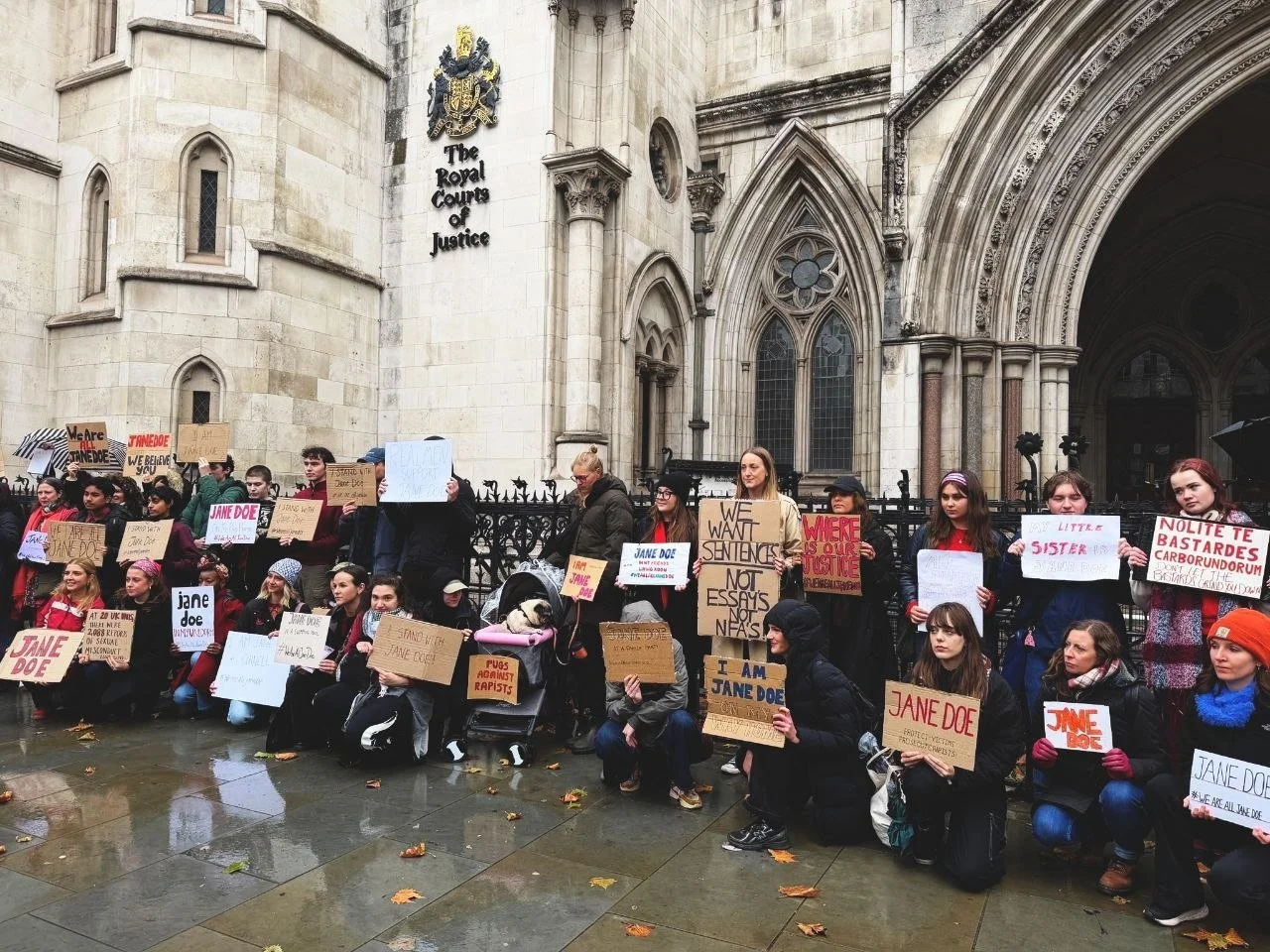
On Saturday 24 October, I stood outside the Royal Courts of Justice in London, surrounded by people holding handmade signs, sharing experiences and standing in solidarity with someone many of us have never met.
Despite the rain, people showed up. Different ages, different experiences, different stories. United by a message that should concern us all.
We are all Jane Doe.
The rally, organised by Lilah McKim, was held in solidarity with Jane Doe, a former Cornell University student who has come forward with serious allegations of sexual violence involving members of a fraternity.
Her case has sparked international scrutiny of how universities investigate allegations, support those who report them and hold individuals accountable. Cornell says its disciplinary process resulted in sanctions, including expulsions and suspensions. Some individuals were also required to complete educational work and reflection essays. The university has since commissioned an independent review of how it handled the case.
But the questions raised go beyond any single disciplinary outcome. What does meaningful accountability look like? And why does speaking up so often come at such an enormous personal cost?
Why I Chose to Speak
I was invited to address the rally as a survivor, a campaigner and the founder of Make Yourself Heard. Standing outside a building representing justice, I couldn’t help but reflect on my own experience of coming forward, only to find myself fighting the very systems I had turned to for protection and accountability. That experience is not unique to me.
For too many survivors, reporting is only the beginning of another exhausting process. Scrutiny, intimidation, questions about credibility and institutional decisions can leave those seeking justice feeling as though they are the ones on trial.
It is why I asked the crowd:
“Why, in 2026, are we still having to stand outside court buildings demanding better?”
Institutions must investigate allegations fairly and thoroughly, respect due process and protect those who come forward. These responsibilities should never be competing priorities. And accountability cannot simply mean responding to public pressure once a case attracts international attention. It must be embedded in the systems themselves.
Solidarity Without Conditions
One of the most powerful things about Saturday was seeing people stand alongside one another without needing to explain why they were there. Some shared their experiences through placards. Others stood quietly in support. Both mattered.
During my speech, I wanted to make one thing particularly clear: “No survivor owes the world their trauma.”
You do not have to speak publicly, waive anonymity, relive your experience or turn your pain into a campaign to deserve dignity, safety and respect. Collective action has enormous strength, but solidarity must never come with an expectation of disclosure.
Beyond One University. Beyond One Survivor.
Jane Doe’s case has become a rallying point for conversations about sexual violence, institutional power and accountability. But these issues do not begin or end at Cornell. They exist across universities, workplaces, communities and justice systems. And the consequences of institutional failures can follow people for years.
My own campaigning has shown me how important lived experience is in challenging those failures. Survivors are not simply people affected by policy and institutional decisions. Their experiences must help shape how those systems change.
Saturday reminded me what happens when individual experiences become a collective call for something better. I am grateful to Lilah for bringing people together, to everyone who stood in the rain, and to those who showed their support from elsewhere.
But solidarity cannot end when the placards come down. We need institutions willing to listen, leaders prepared to act and systems where accountability does not depend on who holds the power, how much public attention a case receives or how hard a survivor is prepared to fight.
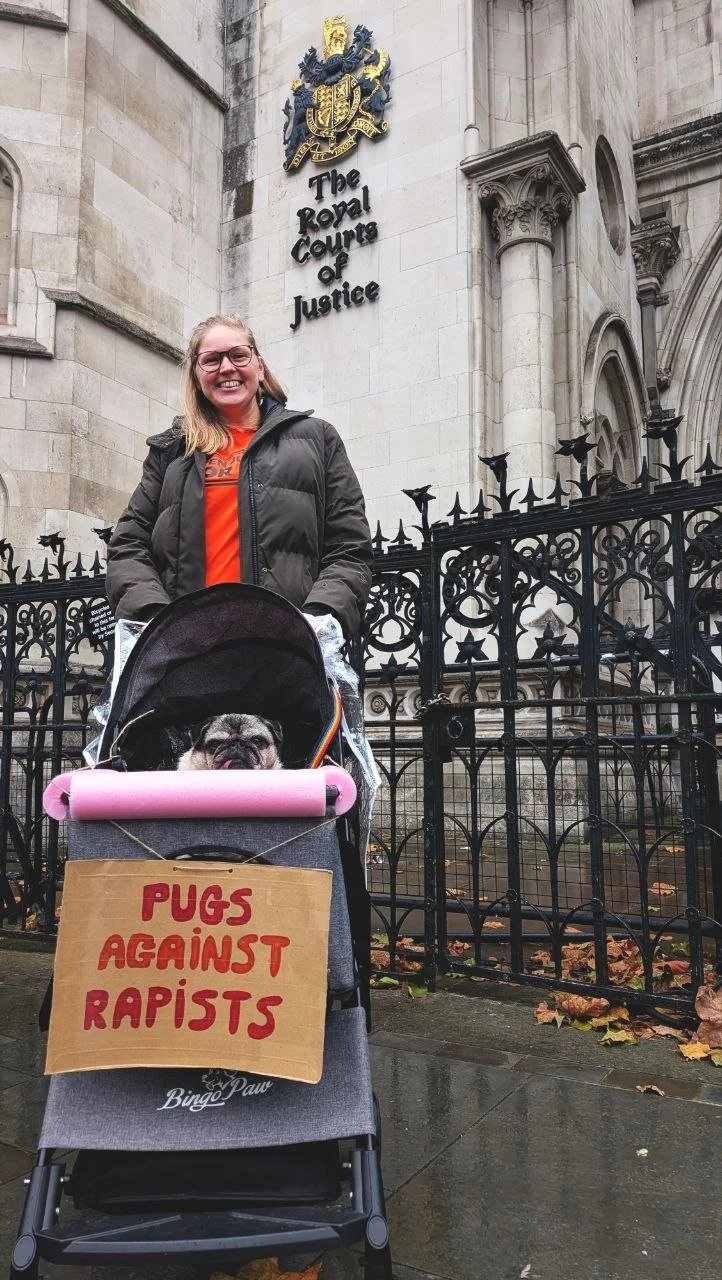
Among those at Saturday's rally was my dear friend Charlotte, founder of Open Justice for All, accompanied by Fred the pug and his rather brilliant Pugs Against Rapists placard.
A reminder that solidarity takes many forms, but the message remains the same: accountability, justice and standing together.
As I said in my closing words:
“We are not asking for special treatment. We are demanding accountability.”
We stood with Jane Doe. And with every Jane Doe whose name we will never know. This is bigger than Cornell. We are all Jane Doe. And together, we will Make Ourselves Heard.
Solidarity gives us strength. Accountability drives change. Justice should never be another battle survivors have to fight.
need support?
Currently in danger or need urgent medical attention? Please call 999.