
Believe Me Is Essential Viewing
The new ITV drama exposes the devastating reality of investigative failure - and the fight it takes to be heard, believed, and protected

This weekend, ITV’s new four-part drama Believe Me arrives on screen - telling the true story of women raped by serial offender John Worboys, and the extraordinary fight it took for them to finally be heard.
Based on real events, the series follows survivors who reported drug-facilitated rape, only to face disbelief, investigative failures, and a system that repeatedly failed to protect women from a known danger.
But Believe Me is not only a story about one perpetrator. It is a story about what happens when institutions fail victims - and what it takes to challenge that failure.
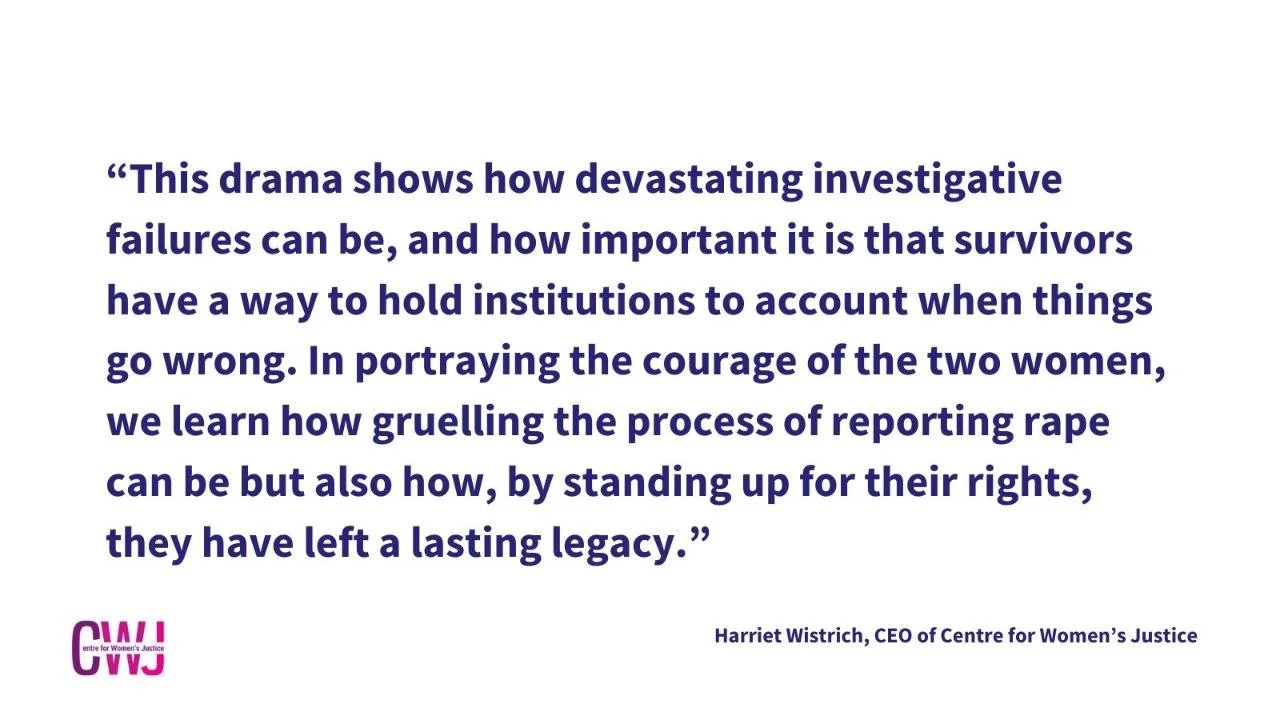
The drama follows the legal action brought by two survivors against the Metropolitan Police, supported by solicitor Harriet Wistrich, now CEO of the Centre for Women's Justice. Their case became historic.
After years of police failures being shielded from accountability, the survivors successfully argued that the investigation into their reports breached their human rights under Article 3 of the European Convention on Human Rights - rights protecting people from inhuman and degrading treatment.
The case ultimately reached the UK Supreme Court, which upheld the judgment in their favour.
The ruling recognised something many survivors already know painfully well: investigative failures are not abstract administrative mistakes. They have consequences. In this case, failures allowed Worboys to continue offending against women on a devastating scale.
The series also explores the women’s later legal challenge against the Parole Board's decision to release Worboys - another moment when survivors were forced to fight simply to be taken seriously.
Why this story still matters
For many survivors, Believe Me will feel painfully familiar.
Not necessarily because their cases mirror Worboys exactly - but because the themes of disbelief, minimisation, procedural failure, and institutional defensiveness remain deeply recognisable across the justice system today.
The drama lands at a time when conversations around violence against women and girls, institutional accountability, trauma-informed justice, and victims’ rights continue to dominate public debate.
And importantly, it also highlights the role the Human Rights Act has played in allowing survivors to challenge serious failings by public bodies.
Whatever broader political debates exist around the ECHR or human rights legislation, this case demonstrates how survivors have used those protections to secure accountability when other avenues failed.
Why is MYH sharing this
At Make Yourself Heard, we often speak about the emotional labour survivors are expected to carry long after violence itself ends.
Reporting.
Repeating.
Explaining.
Fighting to be believed.
Believe Me reflects that reality with urgency - and reminds us why lived experience must remain central to conversations about justice reform. Stories like this matter because they challenge the idea that institutional failure is inevitable or acceptable.
They remind us that accountability is possible. That systems can be challenged. And that survivors speaking out has always been a driving force behind change.
When to watch
The first episode of Believe Me airs Sunday, 10 May at 9pm on ITV1, with further episodes expected across 11, 17 and 18 May.
This is going to be difficult to watch - but essential.
Watch it. Talk about it. Share it.