
The Case for Juryless Rape Trials
Why the Real Reform We Need Isn’t About Lower-Level Crimes, But About Rape
By Charlotte and Jade Blue
The recent debate on restricting jury trials has focused on so-called “lower level” offences to allegedly relieve the waiting times for the more serious crimes. But that’s not where the real crisis sits. The greatest inconsistency - the greatest injustice - occurs in rape and sexual violence cases, where juries are asked to evaluate crimes, that they fundamentally do not understand.
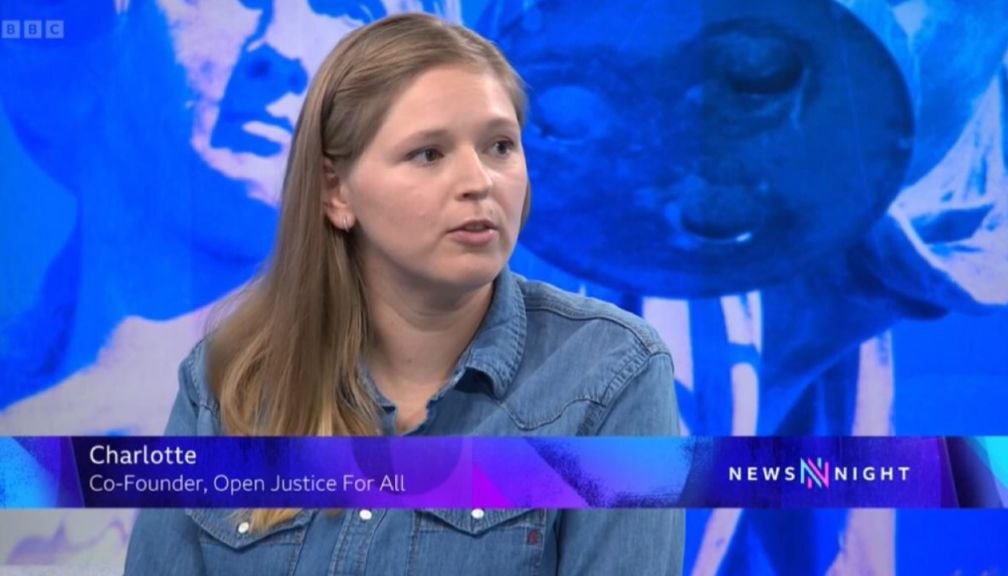
Charlotte’s Experience Shows the System’s Contradictions
When Charlotte’s case was sent to the magistrates’ court, she initially felt relief.
A judge and magistrate, she thought, would understand the law, coercive control, and trauma better than a jury. But what she learned - what many survivors discover - is that judges aren’t automatically equipped either. Training is inconsistent, understanding varies, and myths persist.
Victims are left choosing between:
a jury saturated in social stereotypes, or
a judge who may have received no meaningful training in sexual violence
No one should have to navigate a system built on that kind of luck. Charlotte’s experience is not an anomaly; it sits within a much wider pattern of attitudes that shape how rape is judged, both inside and outside the courtroom.
The LBC Caller Illustrates the Exact Problem
The recent LBC clip captures one half of the contradiction perfectly: If the perpetrator is older, “the consequences would be too severe.”
And we’ve all heard the other half too: If the perpetrator is young, “don’t ruin his life for this mistake”
Source: LBC (www.x.com/LBC)
Two completely opposing positions, both leading to the same outcome: excusing the perpetrator and diminishing the victim. This is the mindset that walks into jury rooms. This is what victims face before any evidence is examined. This is why outcomes feel arbitrary, unsafe, and traumatising.
It is harrowing. It is troubling. And it makes you want to cry and scream in equal measure.
Juries Were Not Built for Crimes Like Rape
Juries were not built to determine rape. The evidence in these cases is shaped by trauma, by coercive control, by long-term patterns that unfold behind closed doors, and by social myths that still define how people think about sexual violence. Asking 12 members of the public to set all of that aside - instantly and perfectly - is not a fair expectation. And it is certainly not a safe foundation for justice.
Why Juryless Rape Trials Must Be Considered
This is why we should seriously consider juryless rape trials. Not because the current system doesn’t work, and not because judges are flawless, but because - with the right reforms - a specialist panel could finally offer what juries cannot: consistency, expertise, clearer reasoning, and decision-making rooted in evidence rather than myth or performance. It would reduce the bias, the theatre, and the reliance on “common sense” narratives that so often distort these cases.
Right now, victims are gambling their trauma on whoever happens to turn up for jury duty. That cannot be the benchmark for justice.

But Juryless Trials Only Work If Safeguards Are Radical
If we are going to even consider juryless rape trials, the safeguards cannot be optional or symbolic. Judges already handle some of the most complex areas of the justice system - so proper, mandatory training on sexual violence, coercive control, trauma, rape myths and patterns of offending should not be up for debate.
It should be required. And crucially, no single judge should ever carry the full weight of deciding a rape case.
A small panel of trained judges or specialists offers a built-in challenge, reduces the risk of one person’s bias dominating, and creates shared accountability.
But expertise alone is not enough - transparency must increase as jury involvement decreases. That means full open justice: free, accessible transcripts; recorded hearings across all courts, including magistrates; and clear, reasoned verdicts that can be scrutinised. If judges are to be trusted with greater responsibility, the public must be able to see how that responsibility is exercised. Only with these safeguards does the conversation about juryless rape trials become a conversation about strengthening justice, not weakening it.
Would This Speed Up Trials?
There’s a real possibility that it would. Removing the jury means eliminating jury deliberation, which alone reduces a significant source of delay. Without twelve people to persuade, courtroom behaviour also changes: there is less theatrical cross-examination, fewer attempts to “perform” for the box, and far more streamlined proceedings. Judges already handle the most complex parts of the justice system - so a specialist panel, focused on evidence rather than performance, is likely to move cases through with far greater efficiency.
But even if the time savings turn out to be modest, the gains in consistency and safety would be far more significant. The real benefit isn’t simply speed; it’s a process that is less shaped by myth, performance, and chance - and one that offers victims a fairer, more stable path to justice.
And if we were genuinely serious about speeding up trials and reducing waiting lists, there is a long list of measures we already know would help - from running courts at full capacity to ensuring prisoners are brought to hearings on time.
The Debate Needs Honesty, Not Half-Measures
This isn’t about removing juries from minor offences or speeding up the ever-growing waiting list - it’s about confronting a far bigger truth. Rape trials ask ordinary people to make decisions they are not trained or prepared to make, and the evidence tells us they shouldn’t. The attitudes in the recent LBC clip make that painfully clear: if he’s young, “don’t ruin his life”; if he’s older, “the consequences are too severe.” These aren’t outliers; they echo what survivors hear constantly, and what many jurors bring into the room.
Charlotte’s experience points to the same problem. So do countless accounts from people who’ve sat on juries, and the testimony survivors share every day. Even the incoming Victims’ Commissioner has said the current model is untenable. Yet the debate continues to circle the edges instead of acknowledging the core issue: rape cases are uniquely vulnerable to bias, myth, and cultural conditioning in a way no other offence is. A system built on this foundation simply cannot deliver consistent justice.
Radical Reform Isn’t Extreme - It’s Necessary
If we want a justice system that functions with integrity, then the reforms must be structural, not symbolic. That means trained specialist panels deciding rape cases, not unprepared laypeople. It means full open justice - recorded hearings, free and accessible transcripts, and clear reasoning for decisions - so that accountability increases, not diminishes. And it means transparency at every stage, including magistrates’ courts, where more cases may soon be heard.
The alternative is what we have now: a system where outcomes hinge on myth, fear, age, assumption, and luck. Victims deserve more than luck. They deserve a process that understands the crime it is judging.