
Juliana explores the lasting impact of PTSD following sexual violence and why survivors need accessible, sustained recovery support alongside justice
By Juliana Terlizzi
We keep asking victims to come forward. I would like to know what we are asking them to come forward to. A statement. A reference number. A promise of justice. But while that promise works its way through the system, who is helping them sleep? Pay the rent? Leave the house. I often wonder: at what point does waiting for justice become another thing we need to recover from?
For a survivor living on high alert, waiting can mean repeatedly preparing to face what happened, only to be told to prepare again next year. Rape Crisis England & Wales has documented how court delays and last-minute postponements can compound trauma, damage mental health and lead some survivors to withdraw from proceedings. [1]
An adjournment may move a hearing in a diary. A survivor still has to live through every day in between. I will keep campaigning for accountability. But recovery cannot remain suspended while we wait for the justice system to catch up. I got a conviction. My nervous system did not receive the memo. The word 'triggered' is used so casually that I sometimes wonder whether people still hear what PTSD can mean. Flashbacks, avoidance and being constantly on alert are recognised symptoms. [13] For me, it can mean not managing to leave the house alone.
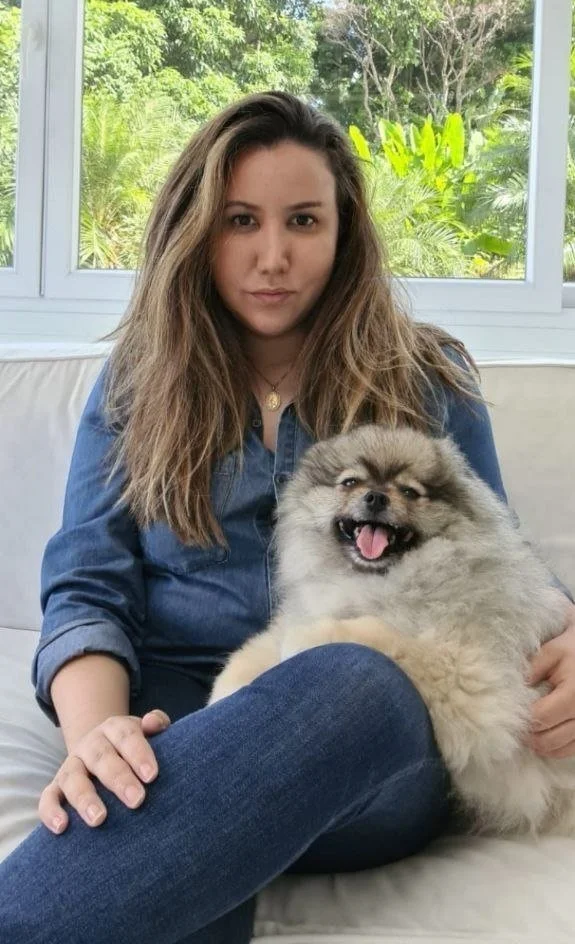
My Pomeranian, Quindim, makes going out possible. Having him beside me gives me peace of mind: if a panic attack or flashback comes, he can bring me back. Stroking his fur helps me reconnect with the present. I feel that I will be okay. His presence helps before a crisis begins, because I know he is there.
Perhaps it does not help that he is so beautiful. A cachorro de madame, as we might say in Brazil: a pampered little lapdog. A small dog can make a very large difference to whether I manage to leave the house.
I understand that access arrangements need to consider the setting and other people's needs. But I have not managed to attend my GP in person for years because I could not go by myself. I tried to find a route to having his assistance recognised. I found it practically impossible. There is no official UK assistance-dog register. Some PTSD assistance-dog programmes are restricted to veterans and emergency-service personnel; other routes exist, but finding one I could use has been another obstacle. [14] PTSD deserves recognition whatever caused it. Rape survivors need accessible routes to support too.
I have ordered food through Deliveroo 1,830 times because I have struggled to get to the supermarket. That reliance carries costs. These are some of the everyday expenses of living with PTSD. [15]
The Office for National Statistics estimated that almost 900,000 people aged 16 and over experienced sexual assault, including attempts, in England and Wales in the year ending March 2025. Among respondents who had experienced rape or assault by penetration, including attempts, since turning 16, around one in seven had reported their most recent assault to police.[2] Support must reach the people outside those police files, too.
Important services already exist: sexual assault referral centres, specialist charities and NHS treatment. Help is available without reporting to police. Yet the existence of a service does not guarantee timely access. Rape Crisis has documented funding pressures and thousands of people waiting for support.[3] What would it look like to make recovery a serious public commitment?
Safety. Stable housing. Help with financial insecurity. Specialist treatment. Support returning to work when someone is ready. A person who helps you navigate the options, so that finding help does not become another exhausting job.
Research has linked PTSD with higher risks of later dementia and autoimmune disease. These are associations; they do not establish that PTSD itself causes those conditions or predict any individual survivor's future. They strengthen the case for taking our physical and mental health seriously. [4]
We need access to established PTSD treatments, including trauma-focused CBT and EMDR. NICE already advises that treatment should not be held back solely because court proceedings or compensation claims are ongoing. [5]
And there are accessible tools people can use in everyday life. Breathwork, through Stuart Sandeman's work, has helped me feel grounded. Gentle, slow breathing can help reduce stress and physiological arousal. There are free instructions, including from the NHS, and simple exercises can cost nothing to practise. [6,7] No equipment. No subscription. Something you can carry with you because you are already carrying your breath. That matters when someone's world has become very small.
It is one tool among several, with room for people to choose what helps them. Teaching an accessible skill still requires care, and affordable tools belong alongside properly funded specialist support. What about carefully evaluated equine-assisted programmes? Or voluntary, trauma-informed self-defence, with its potential to help people explore boundaries, confidence and a sense of agency? [8,9]
The responsibility for an assault always belongs to the perpetrator. Freezing was never a failure. Afterwards, some of us want opportunities to rediscover our strength and feel that our bodies and our space belong to us. I would quite like my journey to work to become a journey to work again. An ordinary inconvenience involving public transport. That would be lovely.
We also need better understanding of trauma among employers, families and public services. What can look like withdrawal, unreliability or an overreaction may be someone struggling to feel safe. Understanding that can change how we respond.
There is another cost: being harmed again. A review of longitudinal studies found that more severe PTSD symptoms were associated with a higher risk of later victimisation, including intimate partner violence and sexual violence. [10]
That should make recovery and protection part of the same conversation. No survivor should have to become perfectly healed to deserve safety. The responsibility for every new act of abuse belongs to the person committing it. And then there are the children.
Before we have words for fear, we depend on someone to help us settle it. For many of us, that first person is our mother. Young children develop their responses to stress through relationships with the adults who care for them. Prolonged exposure to violence or instability can affect that development; safe, responsive relationships can help protect it. [12]
So when a mother is living in survival mode, why are we expecting her to provide safety while leaving her own safety unresolved? A mother living with trauma can still be a loving, protective parent. Fathers and other trusted caregivers matter too. Supporting her safety and recovery can strengthen the circle of support around a child.
We need safe homes, practical help and care that reaches the family. We need to stop reaching for a plaster when the wound needs surgery. Helping survivors now is also part of protecting the next generation.
A support budget can be cut. The consequences of violence do not disappear with it. Government cost estimates already account for health care, lost work and the response of police and courts. [11] But even if I never returned another penny to the Treasury, I would still deserve care. So would you.
One question lies at the heart of this essay: if we recognise how profoundly PTSD can affect war veterans, why do rape survivors still have to fight to have its impact taken equally seriously? The source of someone’s trauma should never determine the urgency, compassion or support they receive.
I spend a lot of time fighting for future victims. Some days, I am doing that from a house I still struggle to leave. Keep working towards the day fewer people are hurt. And help those of us already here reclaim our lives. We cannot promise a particular verdict. We can commit to making safety, treatment and sustained recovery support accessible, whatever happens to a case. Our lives are happening while we wait.