
A Sleeping Person Cannot Consent
I’ve spent years talking about sexsomnia, consent, and what happened to my rape case. But reading this investigation brought me back to a different question - one I’ve never really been able to shake
By Jade Blue
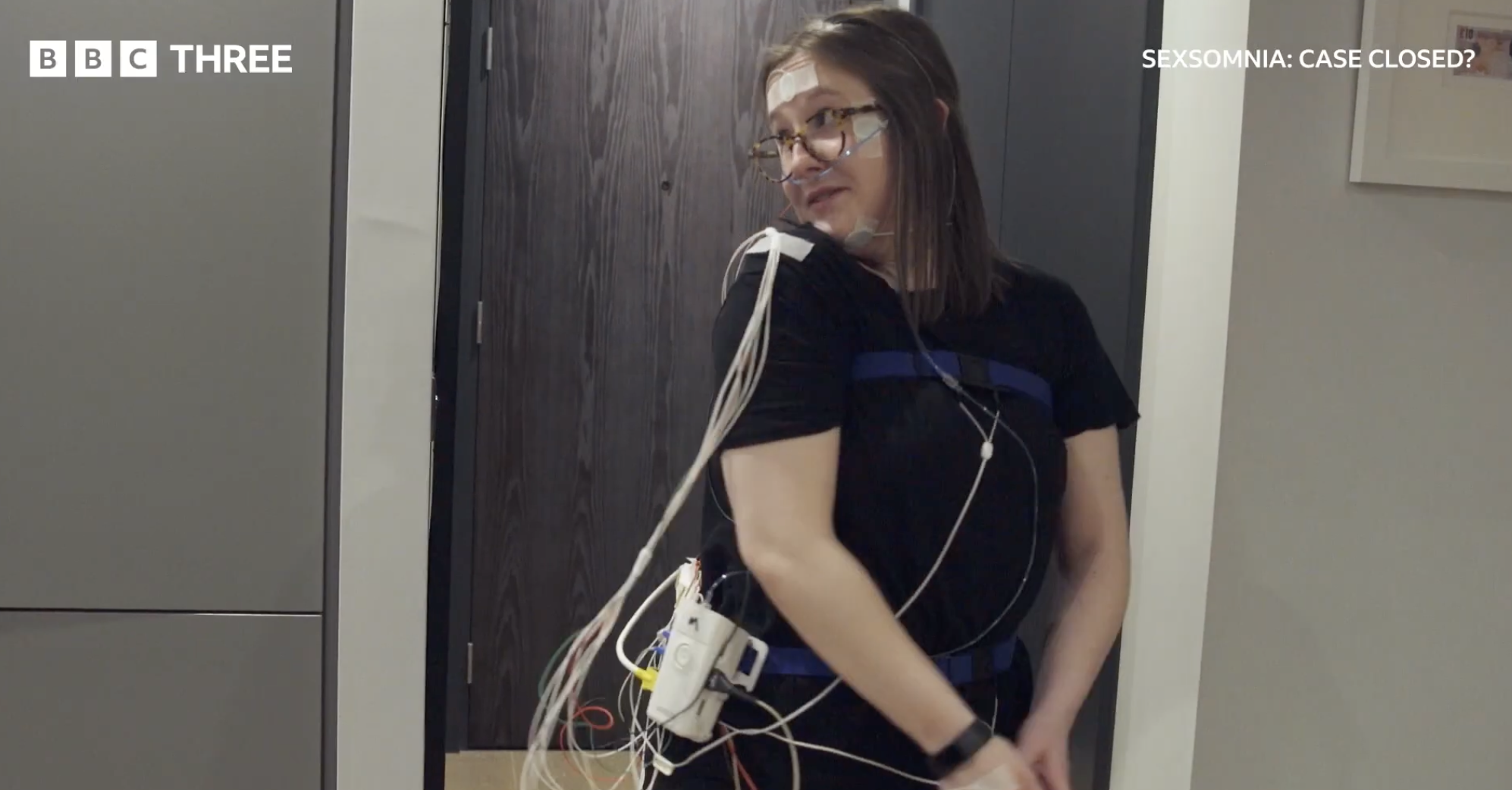
What actually happened to me while I was asleep?
The Times has published an investigation into sexual content depicting sleeping and unconscious women being shared across mainstream porn sites and social media.
Millions of views. Women asleep. Women unconscious. Women potentially drugged. Women being filmed. And all of it sitting behind words like “sleep sex”, “somnophilia” and “fetish”. I find those words difficult.
Because sometimes language makes something sound much more complicated than it actually is. A sleeping person cannot consent. That is the starting point. And for me, this story feels incredibly close to home. I woke up in 2017 believing I had been raped while I was asleep.
Years later, my case would become publicly associated with another sleep-related word: sexsomnia. The defence suggested that I could have initiated sexual activity while asleep myself. That suggestion ultimately became so significant that my rape case was dropped just 13 days before trial.
I have spent years campaigning around what happened next - the CPS decision-making, the use of expert evidence, the treatment of sexsomnia claims and the way my case was allowed to collapse. But there is another part of all of this that I speak about less.
I still don’t know exactly what happened to me that night. And I probably never will. I have always believed there was a very real possibility that I was drugged. That possibility was never properly investigated. The CPS-appointed sleep expert explicitly told me he believed I may have been drugged with GHB. For whatever reason, that concern was never properly pursued.
Reading accounts of women being deliberately sedated and then raped while unconscious is therefore not abstract to me. Neither is the filming. Because I still carry another fear. What if there are recordings of what happened to me? Police took my phone. His wasn’t. I have never understood that.
If somebody is unconscious during an alleged rape, they cannot tell investigators what happened during that period. That surely makes the evidence belonging to the person who was awake even more important.
Their phone. Their searches. Their messages. Their photographs. Their videos. Their digital footprint. I don’t know whether anything existed on his phone. That is precisely the problem. Nobody looked.
And once you know that videos of unconscious women are being created, traded and consumed online - sometimes alongside conversations about how to drug women without them knowing - it becomes very difficult not to wonder. That fear may never go anywhere.
There is something uniquely unsettling about being sexually assaulted while asleep. You don’t have the memory that people expect a rape victim to have. There is no neat sequence of events you can replay.
You cannot necessarily say what happened first, what happened next, what was said or how long it lasted. You wake up into the aftermath. And then everybody else starts trying to tell you what might have happened while you were unconscious.
That was one of the hardest parts of my case. At some point, the question seemed to shift. Instead of what happened to Jade while she was asleep? It became could Jade have done something while she was asleep? That distinction matters enormously to me.
What still feels ridiculous is that I was suddenly expected to disprove a condition introduced by the defence, despite there being no prior suggestion of it.
I underwent specialist sleep assessments and had my sleep history scrutinised to challenge a sexsomnia theory raised by a defence expert who had never even met me. An NHS specialist later found no precipitating factors for NREM parasomnia. Somehow, I was left trying to prove what I hadn’t done while unconscious, while obvious questions about what may have been done to me were never pursued with the same determination.
Sexsomnia is real. I have never argued otherwise. But just because something is medically possible doesn't mean it happened in a particular case. But just because something is medically possible doesn't mean it happened in a particular case. And it should never stop investigators from asking other obvious questions. Was she drugged? What did the suspect do before she went to sleep? What did he do afterwards? What was on his phone? What was his search history? Was anything recorded?
Those questions matter precisely because the person asleep cannot answer them. That is also why I find the phrase “sleep sex” so uncomfortable. It can sound mutual. Soft. Almost playful. But there is nothing soft about sexual activity happening to somebody who is unconscious and has not consented. And there is something incredibly disturbing about sexual violence against sleeping women being turned into something searchable, watchable and profitable.
We have seen through the Gisèle Pelicot case what can happen behind the closed doors of apparently ordinary relationships. We now know that men are using online spaces to exchange material, discuss sedation and share images of unconscious women.
We cannot keep treating this as some strange corner of the internet that bears no relationship to violence in the real world. And we cannot keep treating unconsciousness as an ambiguity around consent. It isn’t.
I will always have unanswered questions about what happened to me. That is one of the things the justice system left me with. But one thing does not need to be complicated. If someone is asleep or unconscious, they cannot consent.
And if our language, our pornography platforms or even our justice system starts blurring that fact, we should be asking why.
Because sometimes the grey area isn’t really grey at all. Sometimes we have just allowed it to be described that way.