
Post-Traumatic Growth
What it can mean to heal, change and grow while still
carrying the impact of trauma
By Jade Blue
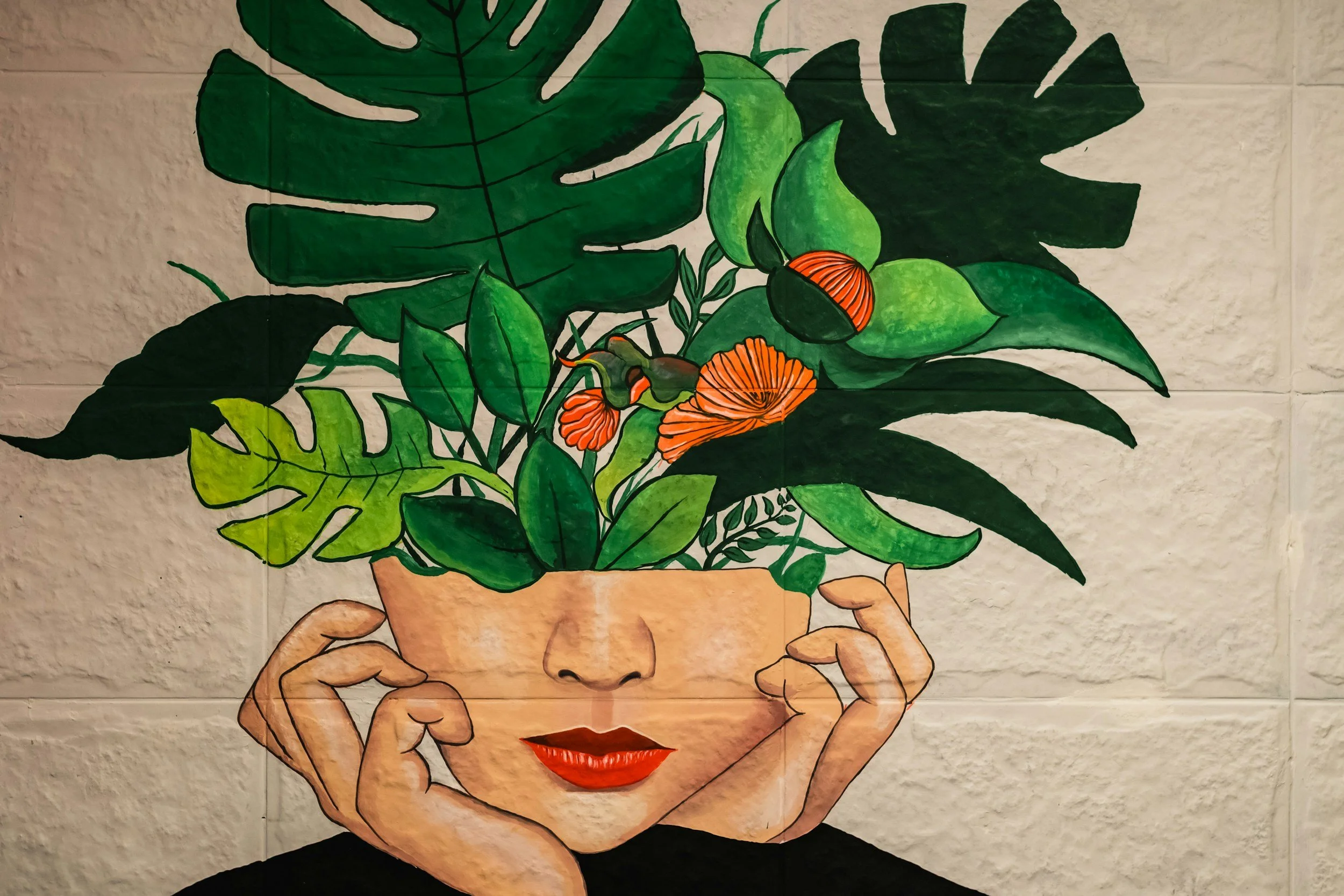
Someone recently mentioned the term post-traumatic growth to me, and for some reason it really stayed with me.
I understood the idea in theory. That after trauma, some people can experience changes in how they see themselves, their relationships, their priorities or the world around them. But hearing it at this particular point in my own healing made me think about something I perhaps hadn’t fully allowed myself to recognise before: that growth and pain can exist at the same time.
So much of the language around trauma is centred on recovery. Getting better, moving forward, finding closure, getting your life back. There can be an unspoken expectation that healing means eventually arriving somewhere on the other side of what happened, ideally looking and feeling like the person you were before it did. But what if you don’t?
What if an experience of sexual violence changes you in ways that cannot simply be undone? What if healing is not about returning to who you were before, but slowly learning who you are now?
I think conversations about post-traumatic growth need to be handled carefully, particularly when we are talking about violence against women and girls. Sexual violence does not make somebody stronger. It does not happen to teach us something. There is no lesson hidden inside it, and nobody should ever feel pressure to turn what happened to them into a story of resilience, purpose or transformation.
But I do think there is space to recognise what survivors sometimes build in the aftermath. Not because of what was done to them, but because of what they have had to do to survive it.
For a long time, I think I unconsciously measured healing by how unaffected I was becoming. Whether something still triggered me. Whether I still felt angry. Whether I could talk about what happened without feeling it somewhere in my body. Whether enough time had passed for me to finally consider it dealt with. I am increasingly unsure that this is what healing looks like.
Maybe healing is not becoming untouched by what happened. Maybe it is becoming more able to live a full life while carrying the fact that it did. That feels particularly true when talking about sexual violence, because the trauma so often extends beyond the act itself. There can be reporting, police interviews, investigations, court proceedings, waiting, disbelief, therapy, relationships changing, work being interrupted, systems failing, and years of your life becoming shaped by something you never chose.
That can change a person. But change does not only have to mean damage.
You may become more aware of your own boundaries. You may become clearer about what you will and will not accept. You may find language for things you previously could not name. You may discover a voice you did not know you had. You may become more politically engaged, begin campaigning, support somebody else, create something, challenge a system or simply start trusting your own instincts again.
Those changes say far more about the survivor than they ever do about the violence. They come from the work of surviving, rebuilding and slowly reclaiming parts of yourself afterwards.
They belong to you. I think that is the part of post-traumatic growth that resonates with me most. It is the recognition that trauma can leave damage and that something new can still grow alongside it. Those things do not cancel each other out.
You can be doing well and still have difficult days. You can speak powerfully about an issue and still be affected by your own experience. You can support others and still need support yourself. You can have rebuilt huge parts of your life and still encounter moments that take you straight back. That does not mean you have gone backwards.
Perhaps that is one of the hardest things to accept about trauma healing. Progress is rarely neat. There is no clean point at which you graduate from survivor to recovered person, and everything that happened becomes distant.
Some experiences stay woven into the architecture of a life. Their presence changes. They become louder and quieter at different times. Sometimes they sit in the background. Sometimes they suddenly take up more space than you expected.
And all the while, other parts of life are being built around them. Friendships. Work. Boundaries. Joy. Love. Purpose. Community. Ordinary moments. New versions of yourself. Maybe we do ourselves a disservice when we measure healing only by how little something hurts.
Perhaps we should also sometimes look at what has changed, what has strengthened and what we have reclaimed. Not to make meaning out of the harm, but to recognise the life that has continued to grow around it.
Pain and growth are not opposites. I can still be affected by what happened to me and recognise how much I have changed since. I can carry the impact of sexual violence and still build a life that is bigger than it.
Both can be true.