
Finding Our Voice: Inside the Violet Choir
I went to a choir taster convinced of one thing: I can’t sing. I left thinking about the extraordinary power of voices coming together
By Jade Blue
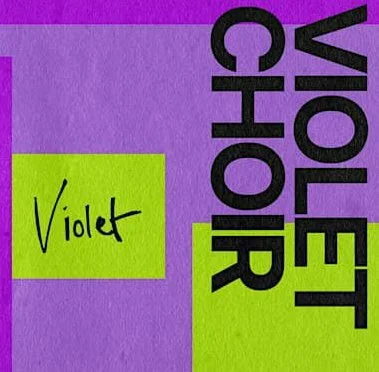
I should start by saying one thing: I cannot sing.
I’m also not someone who naturally walks into a room full of strangers feeling completely at ease. New experiences can make me nervous, particularly when I don’t quite know what to expect. So, turning up to a taster session for the Violet Choir was already a little outside my comfort zone.
But within minutes, that mattered far less than I expected. More than 20 of us were in the room: different voices, different backgrounds, different reasons for being there. Some had lived experience of sexual violence. Others may have supported friends, family or people they love through it.
No one expected us to explain our connection or disclose anything personal. We shared an understanding of why we were there and why it mattered. And there was something incredibly powerful about that.
More than a choir
The choir is part of Violet, a much bigger creative work by composer and creative director Stephanie Singer.
At its centre is “R”, a survivor reporting sexual violence to the police, and Violet - a divine entity who emerges from a club sound system. Even that concept stopped me in my tracks.
There is something unexpected about placing a story of reporting sexual violence inside the world of dance music, sound and movement. We’re used to encountering these subjects through statistics, court reporting, policy documents or stories of institutional failure. Violet puts them somewhere else entirely. Into music. Into the body. Into a room where sound can physically surround you. And into the presence of this almost otherworldly figure emerging through the sound system.
During the taster, Stephanie talked us through her vision for Violet and the performance being created for WOW Festival at Southbank Centre in March 2027. We listened to parts of the music and lyrics and began learning how the choir would sit within that world. It was incredibly affecting.
The production has an energy running through it that feels at once club-like, powerful and deeply emotive. Hearing the lyrics for the first time, knowing the story beneath them, brought me close to tears at moments.
But the room wasn’t overwhelmingly sad - quite the opposite. There was joy in it. Movement. Laughter. Noise. Energy. That contrast is part of what makes Violet feel so powerful. A story about sexual violence does not have to exist only in sadness. A survivor does not have to be represented only through trauma. Here was something creative, loud and alive.
From one voice to many
And then there is the choir. Violet Choir isn’t simply there to provide backing vocals. Bringing dozens of voices into this story feels fundamental to what the work is doing.
Sexual violence can be incredibly isolating. Reporting it can be isolating. Navigating systems supposedly created to help you can be isolating. And yet here was a room full of people doing the exact opposite.
We listened to one another, found notes together, got things wrong together and laughed together. And, very much, sang together.
There is something particularly poignant about a choir built around a story of sexual violence and reporting. So many survivors know what it feels like to struggle to be heard. To have your words questioned, minimised or misunderstood. Sometimes to feel that silence is easier. Violet takes that idea of voice and makes it collective.
You don’t have to stand in front of the room and tell everybody what happened to you. You don’t have to explain why you’re there. You don’t even have to be a particularly confident singer. Believe me. You just need to add your voice. And suddenly you are part of something much louder.
Making space for something other than trauma
That stayed with me afterwards.
When we talk about sexual violence, survivors are so often placed into very narrow narratives. We are expected to talk about what happened, what the police did. What happened with the CPS. Whether there was a trial. Whether there was a conviction. How traumatised we are.
All of those conversations matter. I spend a huge amount of my own life having them. But lived experience is bigger than the systems we encounter. We can hold anger and joy. Grief and friendship. Trauma and creativity. We can campaign one day and dance the next.
Violet seems to understand that. It gives space to the reality of sexual violence without reducing survivors to what happened to them. Instead, it creates sound around them.
From silence to sound
I started Make Yourself Heard because I believe in the importance of voice - not necessarily speaking publicly, waiving anonymity or telling your story to the world, but creating spaces where people feel heard, informed and less alone. There is no one way to make yourself heard.
For some people, it might mean campaigning. For others, challenging an institution. It might mean making art. Writing something nobody else ever reads. Quietly telling one trusted person what happened. Or choosing never to tell anyone at all. And sometimes, apparently, it can mean standing in a room in Hoxton singing with a group of strangers.
I walked into the Violet Choir taster thinking mostly about whether anyone would notice how badly I sing.
I walked out thinking about community. About what happens when something so often associated with silence meets sound. About how powerful it can be to stand alongside people whose stories you may never know, and still feel part of something together.
And about what those 20-something voices might become when they grow into a choir of 40, standing together at WOW Festival next March. If the energy in that first room was anything to go by, the final performance is going to be incredible.
And yes, I still wouldn’t call myself a singer. But there was something about singing collectively that made that matter far less - and I’ve never felt more certain of the power of raising our voices together.