
Journal
Where lived experience meets reflection and commentary.
M.Y.H x Journal brings together personal stories, opinion pieces and thought-provoking perspectives from Jade Blue and guest contributors. Exploring everything from justice and women's rights to culture and social change, this is a space for honest conversation and fresh perspectives.

Not the Perfect Victim
In Not the Perfect Victim, Anna Kahill reflects on how trauma, silence and a late autism diagnosis shaped her understanding of a rape that happened when she was nineteen. The piece challenges the narrow expectations placed on victims and the myth that there is such a thing as a “perfect victim.”
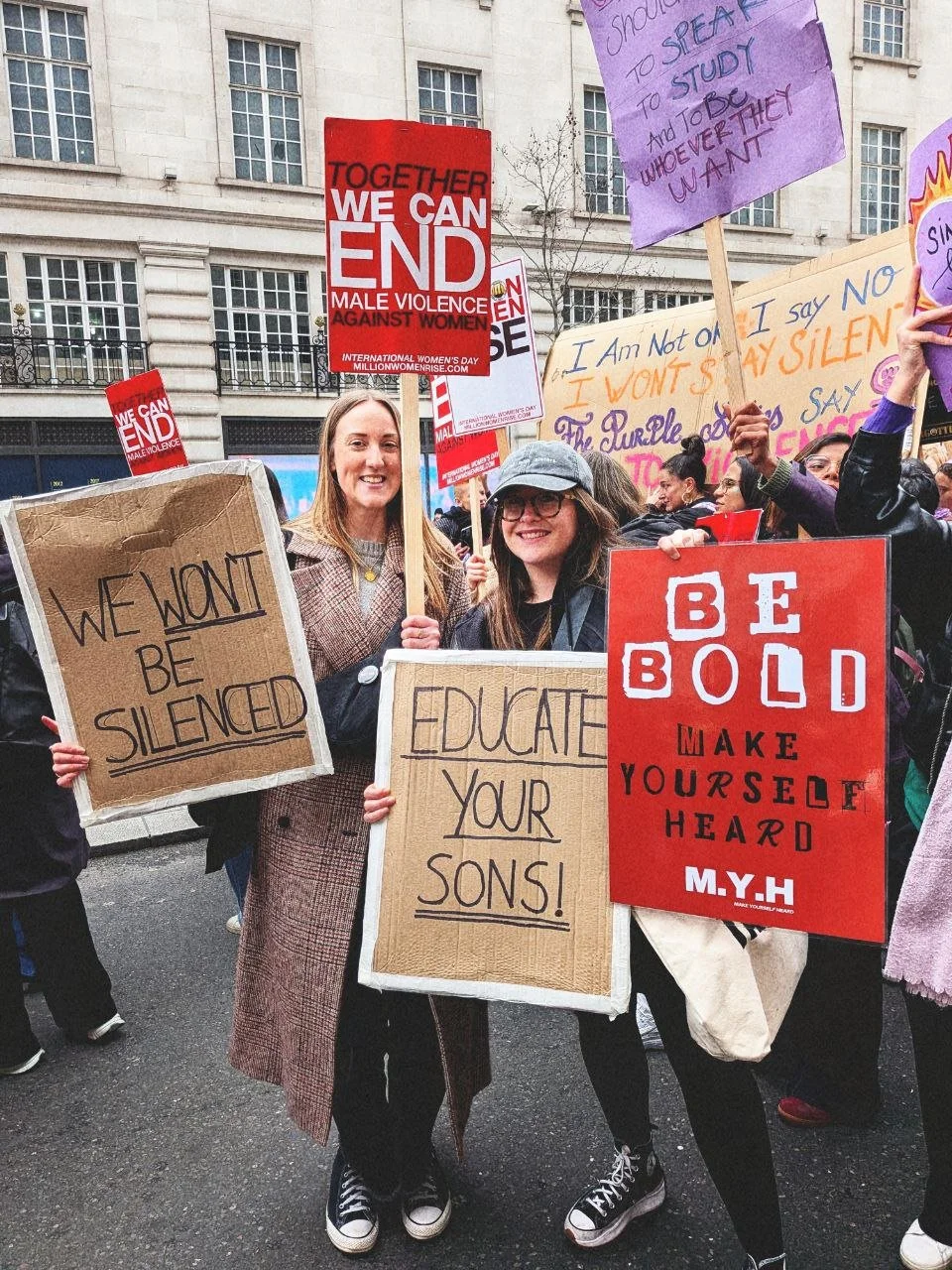
Holding Space
Reflections from a really special International Women’s Day weekend - from hosting our MYH x Victims’ Commissioner gathering to marching at Million Women Rise. A reminder of how powerful it is when people come together, share space, and make themselves heard.
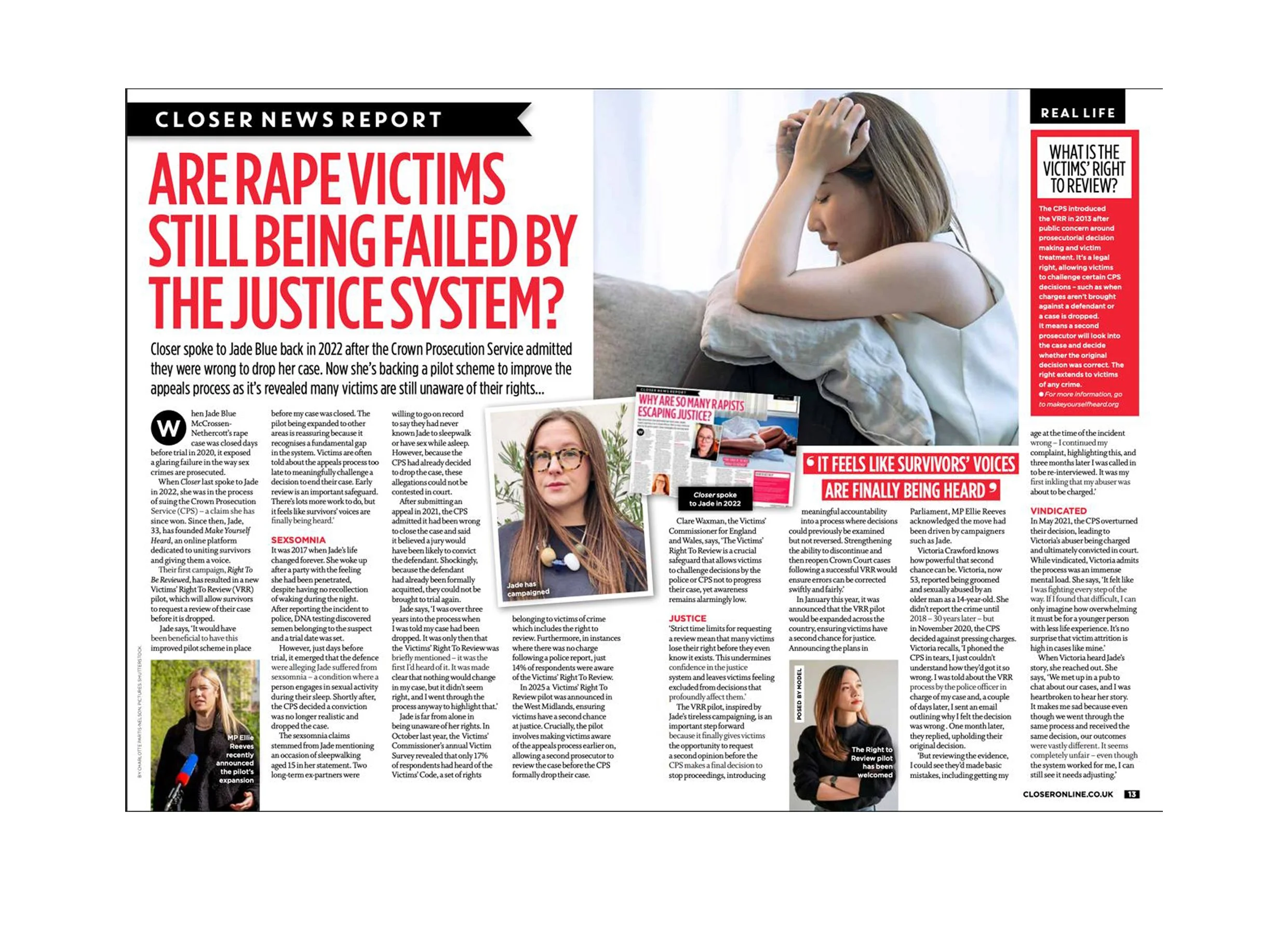
A Moment for MYH
This week has felt particularly meaningful for Make Yourself Heard. For the first time, a national feature has focused not only on my own experience, but on the campaign and the purpose behind Make Yourself Heard itself.
Victims Must Not Be an Afterthought
Thousands of trials pushed to 2028 and beyond. Rape cases listed years away.
As the debate focuses on jury trials and constitutional principle, the human cost of delay risks being sidelined. If reform doesn’t centre victims, it won’t fix what’s broken.
When Harm Happens at Work
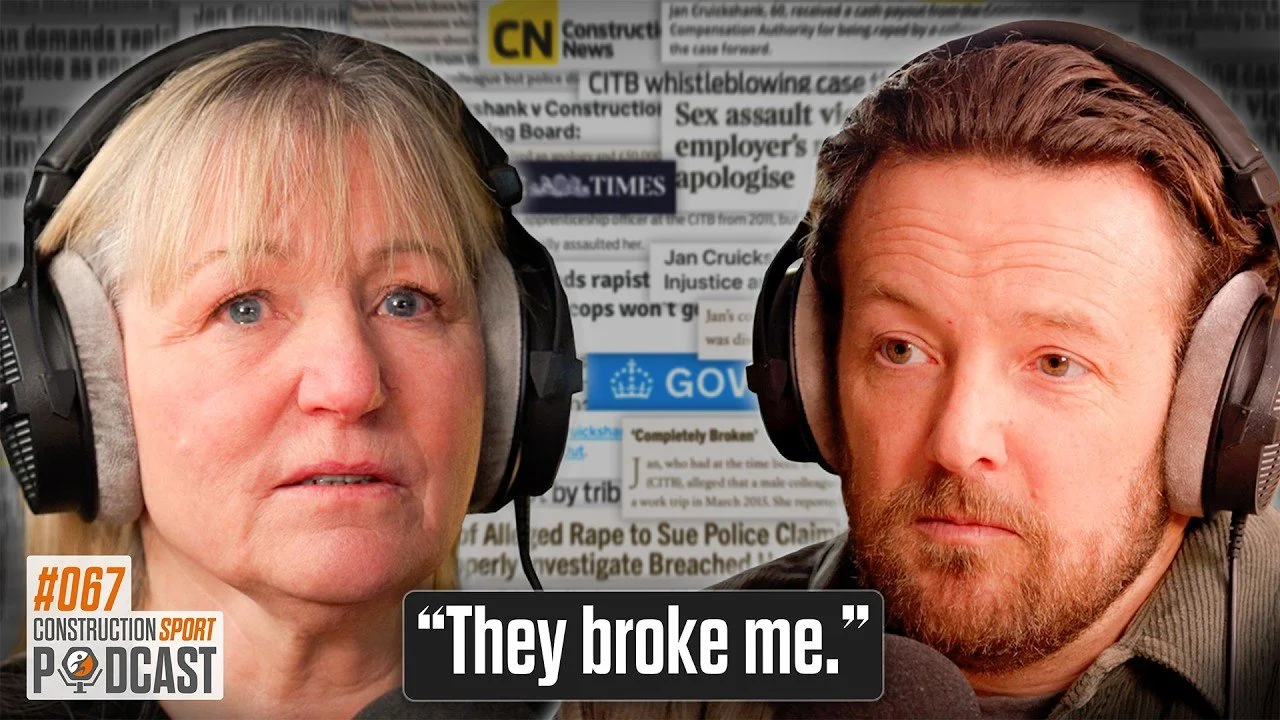
On the Construction Sport podcast, Jan speaks candidly about being assaulted at work, the isolation that followed, and why the construction industry must redefine safety to include dignity, accountability and protection from harm.
Tick-Box Listening
There is a growing recognition that lived experience matters. Survivors are invited into rooms that were once closed to them - police working groups, advisory panels, consultations, and roundtables. On paper, this looks like progress.
In practice, too often it isn’t.

The Files Don’t Change the Story
When the Epstein files came out, people talked about them like they were a revelation. New details. New shock. New outrage. But if you’re someone who’s lived through abuse, it doesn’t feel new at all.
Women and girls have been saying what happened for years. They reported it. They spoke up. They tried to warn people. Most of the time, they weren’t believed, or they were quietly pushed aside.
Who Am I to Be Here?
Imposter syndrome is often treated as a private insecurity - something to overcome quietly before you show up publicly. But in advocacy, it isn’t a side issue. It’s part of the work.
It shows up not because you’re underqualified, but because the ground is unstable. Advocacy often asks people with lived experience to translate pain into policy language, to compress years of harm into a few minutes of “constructive contribution,” and to speak calmly about systems that failed them - repeatedly. That tension creates doubt.

Taking a Breather
Some weeks, the news doesn’t just inform us - it presses on us. Stories of sexual violence, abuse of power, institutional failure, and delayed accountability accumulate rather than pass. They arrive one after another, asking to be absorbed, processed, and responded to. This week felt like one of those moments where the pattern was impossible to ignore. Not because it was new, but because it was so recognisable.
Powerful men named. Survivors are still waiting. Systems speak carefully. Accountability deferred.
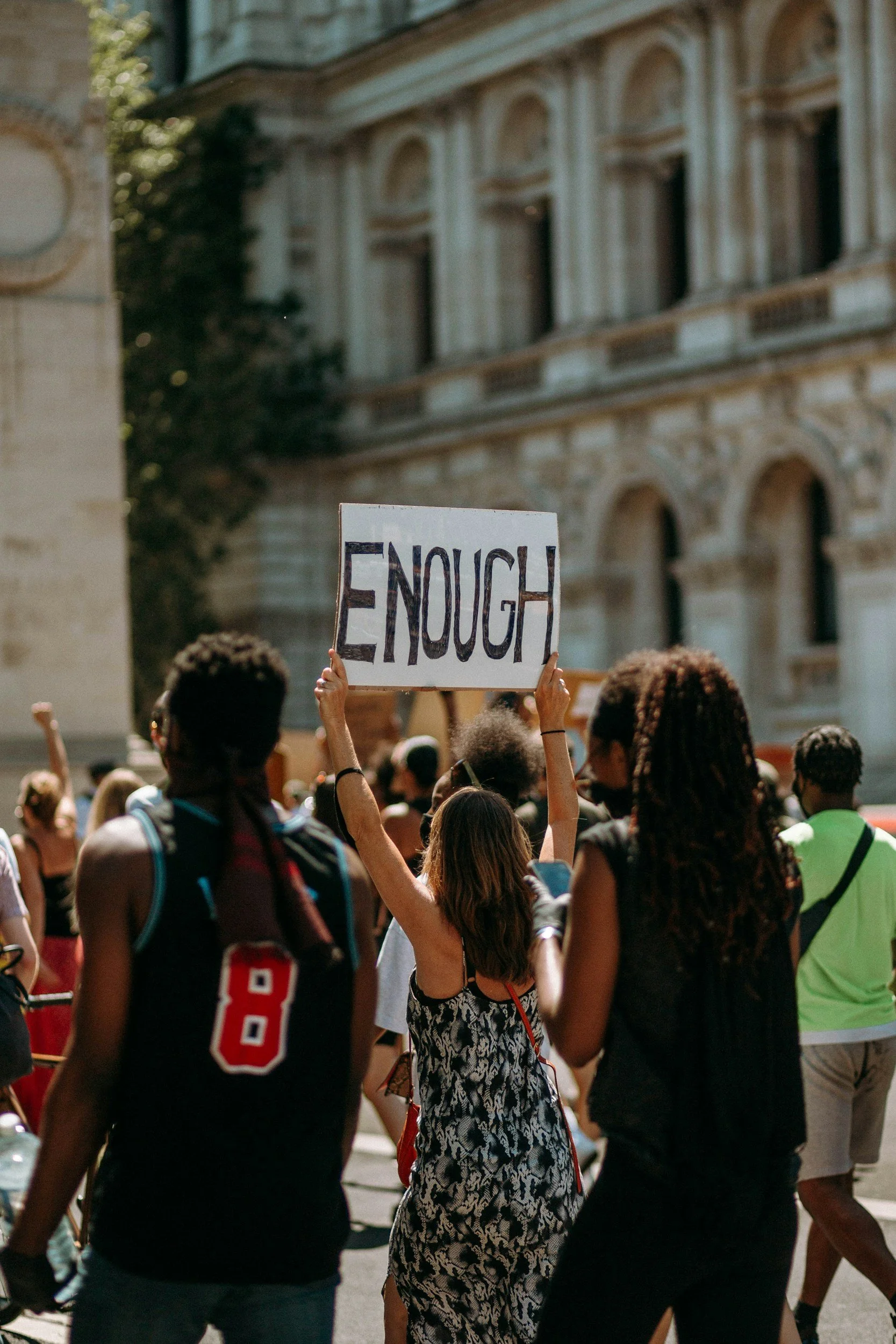
[Image Source: Not Your Polite Feminist]
Signs of Movement
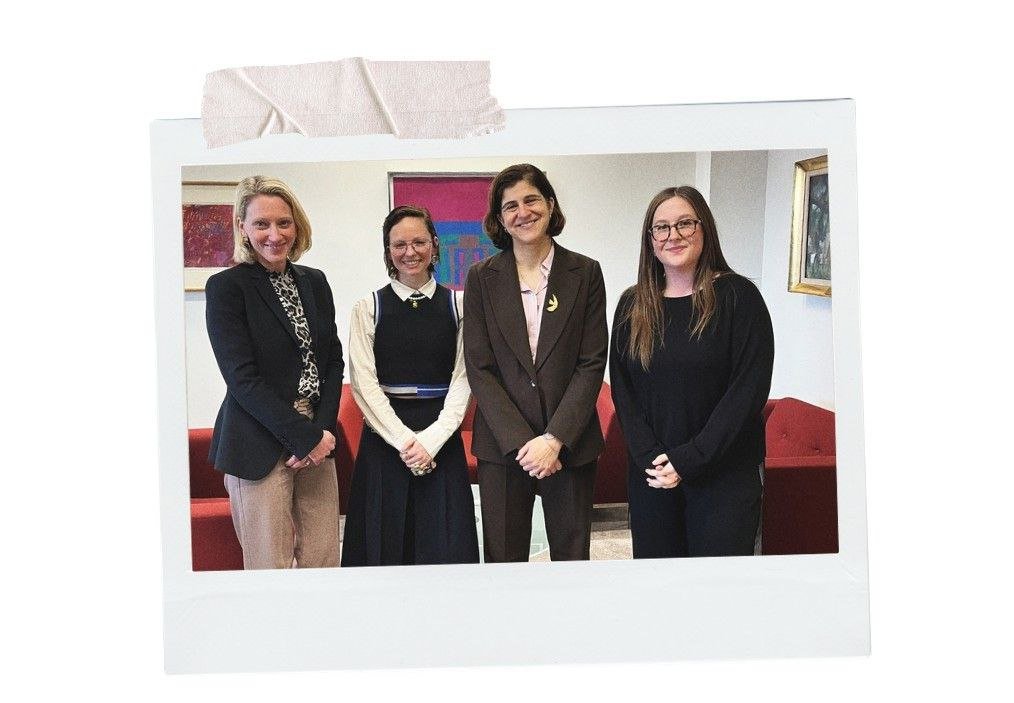
A short journal reflection on the last few days - on conversations that felt thoughtful rather than performative, and on the small, practical changes that can quietly reshape how justice is experienced. Not a conclusion, but a moment worth noticing.
In Whose Eyes Is the Offender Innocent?
A MYH x Journal submission - an Australian experience of process over protection, and harm that continued beyond the court.
This submission examines how decisions made by police, prosecutors, and the courts prioritised procedure over safety, allowing harm to continue long after sentencing.
Staying With Yourself
We live in a culture that rewards constant availability. Being busy. Being responsive. Being visible. Being “on”.
For those of us who have had to fight to be heard, saying yes can feel necessary. If the opportunity is there, we take it. If the journalist reaches out, we respond. If the invite lands, we accept - even when our bodies are already asking us to slow down.
Because what if it doesn’t come back?
You’re Special
This feature documents a survivor’s experience of childhood sexual abuse and the wider pattern of harm surrounding it. Rather than focusing on one act of violence, it examines grooming, community complicity, and the cultural mechanisms that protect abusers. Shared as part of Make Yourself Heard, this testimony aims to raise awareness, support survivors, and challenge the systems that enable abuse to persist.
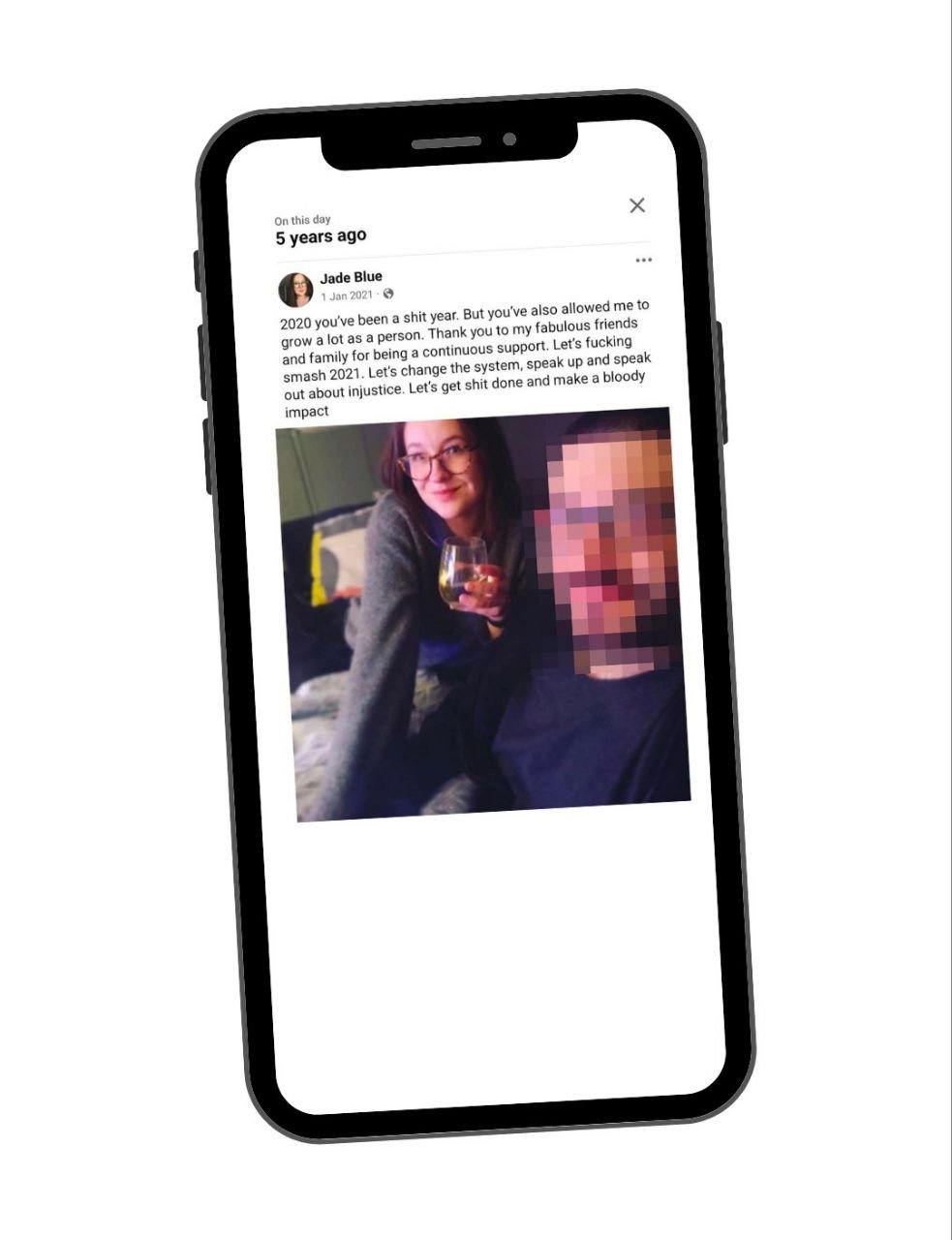
A 2020 Post, Revisited
Five years ago, as I moved into 2021, I wrote this without knowing how long the road ahead would be. I knew I was angry. I knew I wanted change. I knew silence wasn’t an option anymore.
The rape happened in 2017. But 2020 was the worst year of my life.
A Space To Be Heard
Launched in 2025, Making Yourself Heard began as a space - not a statement - shaped by listening, care, and lived experience. This feature reflects on the platform’s first months, the trust placed in it through shared stories, and the emergence of Right to Be Reviewed as its first campaign. It looks ahead to what comes next: sustained listening, survivor-led change, and a commitment to justice that values process as much as outcome.
Still Not Free
As we head into 2026... I should be celebrating another year of freedom from horrific sexual abuse, voyeurism, and control, but instead I’m still waiting anxiously to discover if my abuser has been successful in his appeal to reduce his sentence of 12 years (+3 on licence)
This is his fifth appeal attempt in the three years he’s been behind bars following seven guilty verdicts that include rape, voyeurism, control, and coercion, amongst others.
Jury-less Trials Terrify Me
I haven’t slept properly since the Government mentioned abolishing jury trials for some offences. This is not because juries are perfect – they’re not- but because they’re the only form of oversight within the justice system. When I first started speaking out about the judges’ lack of accountability a couple of years ago, I did so because of something my family lived through and something that opened my eyes to a problem I never knew existed. Most of the public don’t know about this either.

Conforto: Where Healing Finds Safety
In communities across the UK, so many women carry the quiet, often invisible weight of sexual violence and abuse. It is a weight that can reshape lives, identities, and futures. Yet amid these difficult realities, projects like Conforto are creating tailored spaces where survivors can process, share, and rebuild their lives.
Delay Is Not a Reason to Reduce Rights
A survivor’s open letter urging government not to use court delays to justify removing the right to a jury
By Vicki
As debate grows around limiting jury trials, Vicki offers a vital perspective from lived experience. Her open letter sets out clearly why her case must not be used to justify removing the right to be tried by a jury.
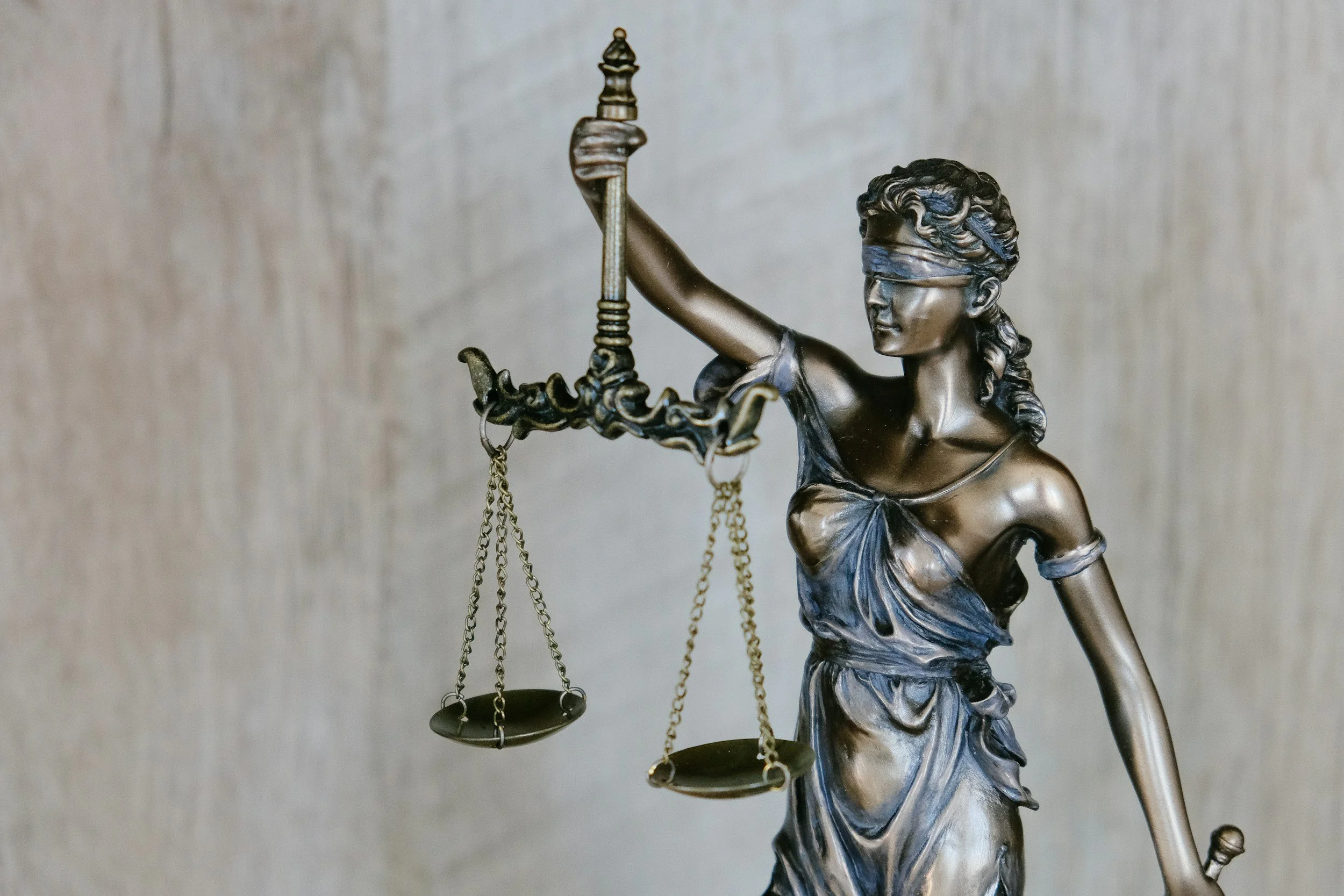
The Case for Juryless Rape Trials
The recent debate on restricting jury trials has focused on so-called “lower level” offences to allegedly relieve the waiting times for the more serious crimes. But that’s not where the real crisis sits. The greatest inconsistency - the greatest injustice - occurs in rape and sexual violence cases, where juries are asked to evaluate crimes, that they fundamentally do not understand.